Fuel Efficiency at Sea: How Modern Diesel Engines Are Becoming Cleaner and Smarter
Tuesday, 5th May 2026
Marine diesel engines have long been the workhorses of the offshore and commercial shipping industries.
They power everything from fishing vessels and workboats to offshore support ships and deep‑sea cargo carriers.
But as global regulations tighten and fuel costs rise, the pressure to improve efficiency and reduce emissions has never been greater.
Fortunately, modern diesel engine technology is evolving rapidly. Today’s systems are cleaner, smarter and significantly more fuel‑efficient than their predecessors—thanks to advances in engineering, digitalisation and alternative fuel integration.
Below is a deep dive into the innovations reshaping marine propulsion, supported by real‑world data and industry statistics.
Why Fuel Efficiency Matters More Than Ever
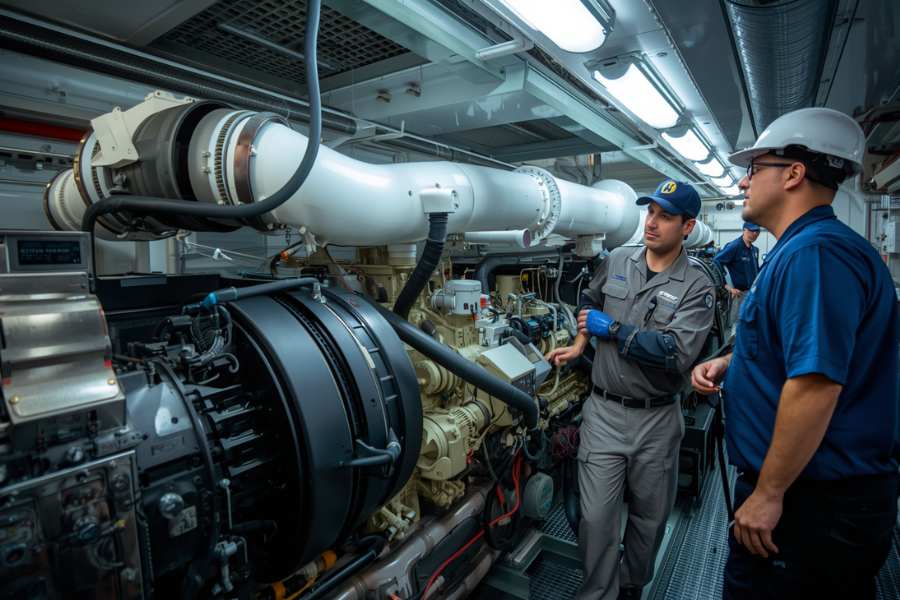
Fuel is one of the largest operational expenses for marine vessels—often accounting for 30–50% of total operating costs depending on vessel type and duty cycle. Even a small improvement in efficiency can translate into major savings over a vessel’s lifetime.
Environmental pressure is also increasing:
- The IMO 2020 sulphur cap reduced allowable sulphur content in marine fuels from 3.5% to 0.5%, pushing operators toward cleaner engines and fuels.
- The IMO’s 2030 target aims for a 40% reduction in carbon intensity compared to 2008 levels.
- By 2050, the IMO aims to cut total greenhouse gas emissions from shipping by at least 50%.
Modern diesel engines are a key part of meeting these targets—especially as hybrid and alternative‑fuel systems continue to mature.
1 – High‑Pressure Fuel Injection: More Power, Less Waste
One of the biggest leaps in diesel efficiency comes from advanced fuel‑injection systems.
How it works
Modern engines use common‑rail injection at pressures exceeding 2,000 bar, allowing extremely fine atomisation of fuel.
Why it matters
- More complete combustion
- Lower fuel consumption
- Reduced particulate emissions
- Smoother engine performance
Efficiency gain: Up to 5–8% fuel savings compared to older mechanical injection systems.
2 – Turbocharging and Two‑Stage Boosting
Turbochargers have been standard for decades, but new designs are pushing efficiency even further.
Two‑stage turbocharging
This system uses a low‑pressure and high‑pressure turbocharger in sequence, improving air delivery across a wider RPM range.
Benefits
- Higher power output from the same displacement
- Lower specific fuel consumption
- Reduced smoke and NOx emissions
Efficiency gain: Up to 10% improvement in fuel economy on certain engine models.
3 – Electronic Engine Management Systems
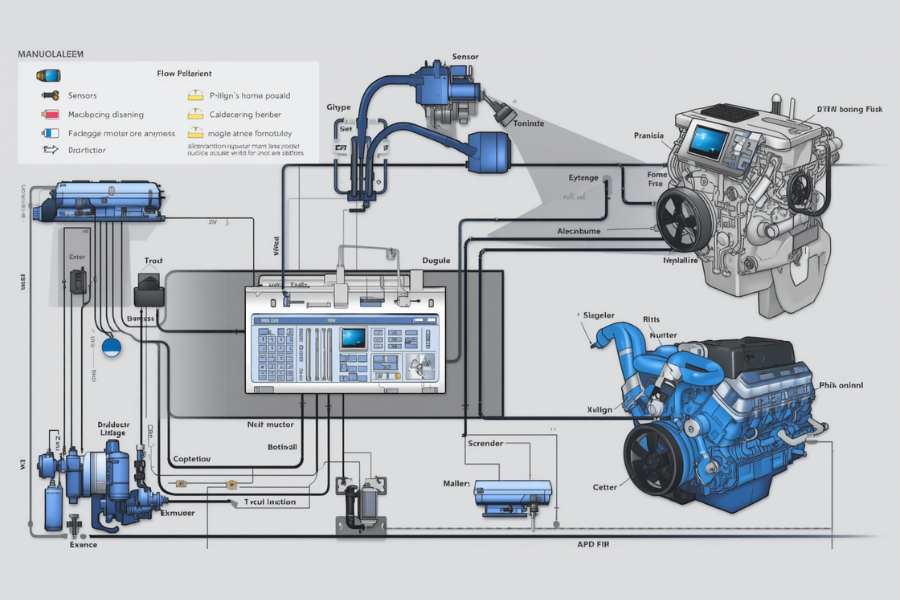
Digitalisation is transforming marine propulsion. Modern diesel engines now feature intelligent control units that continuously optimise performance.
Smart engine controls adjust for:
- Load changes
- Sea state
- Fuel quality
- Temperature
- Emissions limits
Real‑world impact
According to MAN Energy Solutions, electronic engine management can reduce fuel consumption by 3–5% and cut NOx emissions by up to 20%.
4 – Waste Heat Recovery Systems (WHRS)
Marine engines waste a significant amount of energy as heat—up to 50% of total fuel energy. Waste Heat Recovery Systems capture this heat and convert it into usable power.
Uses include:
- Generating electricity
- Powering auxiliary systems
- Reducing load on generators
Efficiency gain: Large vessels can achieve 5–10% fuel savings, with some systems reaching 12% under optimal conditions.
5 – Hybrid Diesel‑Electric Propulsion
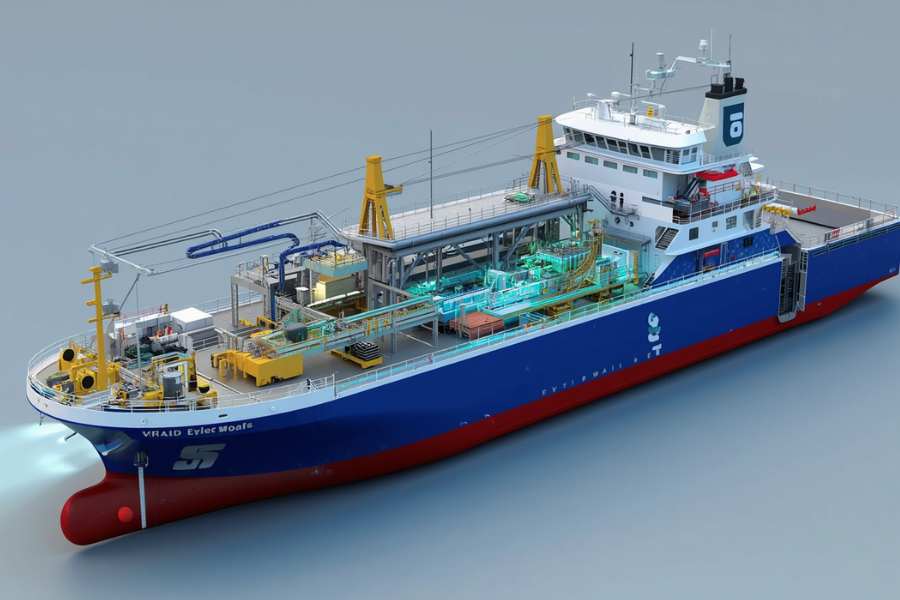
Hybrid systems are becoming increasingly common in offshore support vessels, ferries and workboats.
How hybrids improve efficiency
- Engines run at optimal RPM
- Batteries handle low‑load operations
- Regenerative charging during braking or DP operations
- Reduced idling and fuel burn
Results
DNV reports that hybrid systems can reduce fuel consumption by 15–25%, depending on vessel type and duty cycle.
6 – Cleaner Fuels and Advanced Combustion
Modern diesel engines are designed to run on a wider range of cleaner fuels, including:
- Low‑sulphur marine diesel
- Ultra‑low sulphur diesel (ULSD)
- Biodiesel blends
- Synthetic diesel
- LNG‑assisted dual‑fuel systems
Environmental impact
Switching from high‑sulphur fuel oil to low‑sulphur diesel reduces SOx emissions by over 99% and particulate matter by up to 80%.
7 – Digital Twins and Predictive Maintenance
Digital twins—virtual models of engines—allow operators to simulate performance and predict failures before they occur.
Benefits
- Reduced downtime
- Optimised fuel burn
- Early detection of inefficiencies
- Better long‑term planning
According to Wärtsilä, predictive maintenance can reduce fuel consumption by 2–4% and cut unplanned downtime by up to 50%.
8 – Hull and Propeller Optimisation
Even the most efficient engine can’t perform well if the hull and propeller are inefficient.
Key improvements
- Low‑friction hull coatings
- Propeller polishing
- High‑efficiency propeller designs
- Energy‑saving devices (ESDs)
Impact
A clean hull alone can improve fuel efficiency by up to 10%, while propeller optimisation can add another 3–5%.
The Future: Smarter, Cleaner, More Connected Diesel Power
Marine diesel engines aren’t going anywhere soon. Instead, they’re evolving—becoming cleaner, more efficient and more intelligent. The combination of advanced engineering, digital optimisation and hybrid integration is pushing the industry toward a future where vessels burn less fuel, emit fewer pollutants and operate with greater reliability.
What’s next?
- AI‑driven engine optimisation
- Hydrogen‑ready diesel engines
- Fully integrated hybrid propulsion
- Zero‑emission auxiliary systems
- Autonomous engine monitoring
The result is a new generation of marine diesel technology that supports both operational performance and global sustainability goals.