How Modular Marine Structures Are Transforming Coastal Construction Projects
Thursday, 6th August 2026
Modular marine structures have become one of the most significant advancements in coastal construction, reshaping how engineers, contractors and marine operators deliver complex waterfront and near‑shore projects.
Their flexibility, rapid deployment and predictable performance allow teams to work efficiently in environments where traditional fixed infrastructure is impractical or too slow to install.
Pontoons, floating platforms and temporary marine works now form a core part of modern marine engineering, supporting everything from port upgrades to offshore energy interface projects.
Why Modular Marine Structures Are Changing Coastal Engineering
Coastal construction presents challenges that land‑based civil engineering does not. Tidal cycles restrict working hours. Seabed conditions vary dramatically over short distances. Access for heavy plant is often limited.
Weather windows can close without warning. Modular marine structures solve these problems by providing stable, configurable working surfaces that can be assembled, expanded or repositioned as the project evolves. Their adaptability reduces downtime, improves safety and allows contractors to maintain productivity even in dynamic marine environments.
Core Types of Modular Marine Structures
Modular systems come in several forms, each designed for specific operational needs.
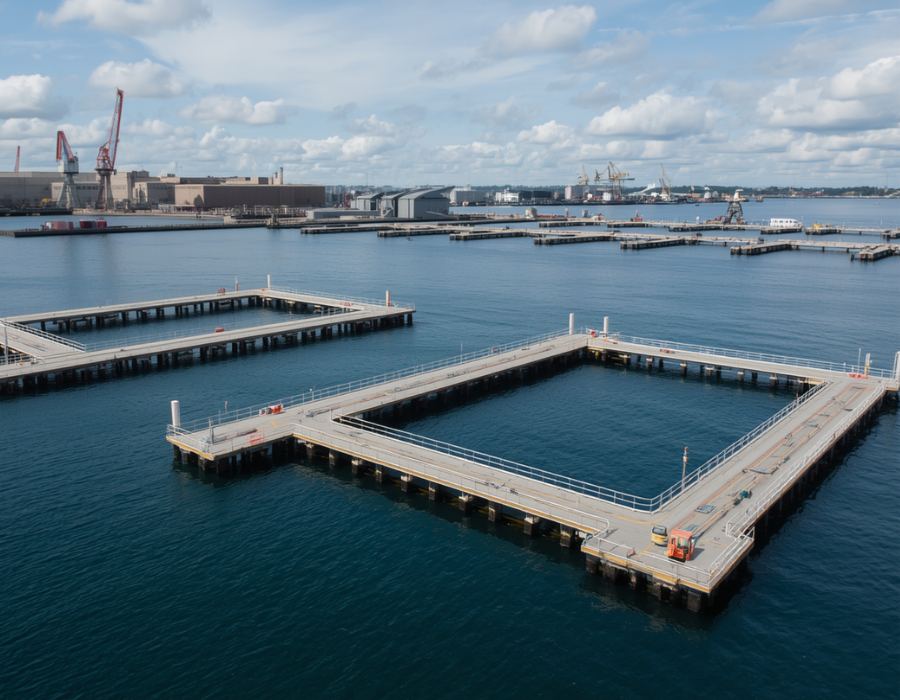
- Pontoons — Interlocking buoyant units that create stable floating surfaces for cranes, lifting operations, workboats and temporary berthing.
- Floating platforms — Larger modular assemblies used for staging equipment, supporting cable landings, providing marine access and hosting temporary workspaces.
- Temporary marine works — Structures such as floating walkways, jack‑up platforms, modular bridges, temporary quays and marine access pontoons that support short‑term operations without permanent seabed impact.
Each system is engineered to deliver predictable load behaviour, certified buoyancy and compatibility with marine plant, lifting equipment and mooring arrangements.
Engineering Advantages for Coastal Construction Teams
Modular marine structures offer several engineering benefits that directly improve project efficiency.
- Rapid mobilisation — Components arrive pre‑engineered and ready for assembly, reducing setup time.
- Configurable layouts — Platforms can be expanded, reshaped or repositioned to match project phases.
- Stable working surfaces — Certified buoyancy and structural integrity support cranes, winches and heavy tools.
- Reduced vessel movements — Contractors can work from a fixed floating base rather than relying on constant boat transfers.
- Improved tidal access — Platforms maintain consistent elevation relative to the waterline, allowing work during more of the tidal cycle.
- Enhanced safety — Controlled access routes, handrails, anti‑slip surfaces and engineered stability reduce risk.
These advantages allow marine contractors to maintain productivity even when working around quay walls, breakwaters, jetties, dolphins or shoreline structures.
Applications Across Coastal and Offshore Projects
Modular systems are now used across a wide range of marine engineering tasks.
- Cable landing works — Floating platforms support near‑shore cable installation, jointing and protection.
- Quay‑wall refurbishment — Pontoons provide access for fender replacement, concrete repair and structural strengthening.
- Piling operations — Modular platforms support piling rigs and temporary works in areas with limited land access.
- Dredging support — Floating structures host survey teams, monitoring equipment and temporary storage.
- Offshore wind interface works — Platforms assist with transition structure access, near‑shore logistics and temporary staging.
- Environmental monitoring — Modular units host sensors, sampling equipment and research teams.
- Temporary berthing — Pontoons create short‑term berths for workboats, barges and crew transfer vessels.
Their versatility allows contractors to adapt quickly to changing project requirements without major redesigns or delays.
Environmental and Regulatory Benefits
Modular marine structures minimise seabed disturbance because they do not require permanent foundations. This reduces ecological impact and simplifies regulatory approval. Their reusability supports sustainability goals and lowers long‑term project costs. Many coastal authorities now prefer modular systems for temporary works because they reduce environmental footprint and allow rapid demobilisation once the project is complete.
How Modular Systems Improve Project Scheduling
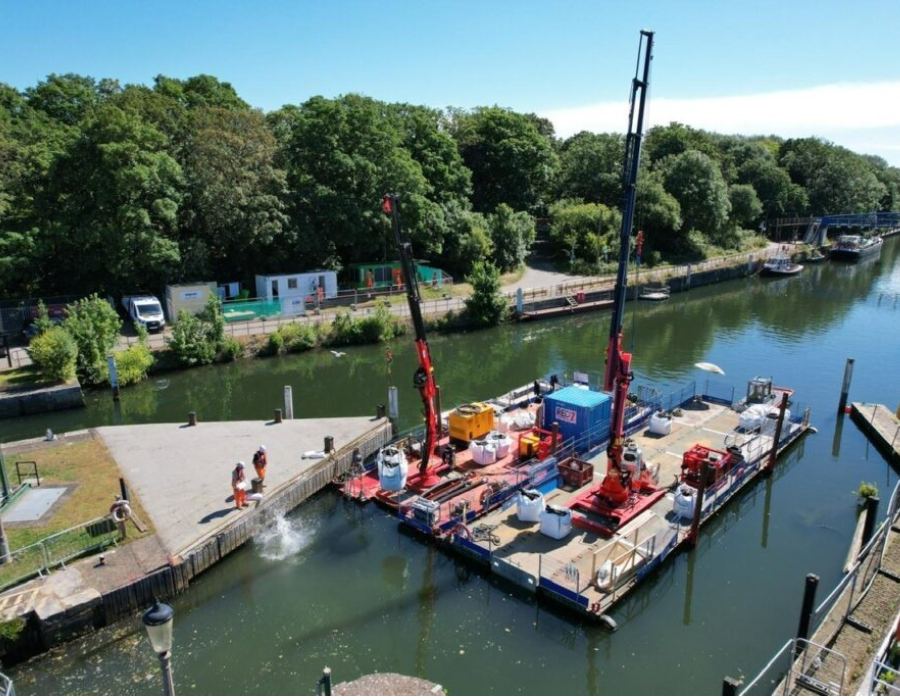
Coastal construction often depends on narrow weather windows and tidal cycles. Modular structures help teams maximise these windows by providing stable access and reducing reliance on vessel transfers. Contractors can position platforms exactly where they are needed, reducing travel time and improving workflow continuity. When project phases shift, the platforms can be relocated without major disruption.
Integration with Mooring and Stability Systems
Modular structures integrate with a range of mooring solutions, including anchors, spud legs and hybrid mooring systems.
Offshore professionals value the ability to maintain stability in dynamic conditions.
- Spud legs provide vertical stability for jack‑up platforms.
- Anchors maintain horizontal positioning for floating pontoons.
- Hybrid systems combine DP assistance with mooring spreads for precise control. This integration ensures platforms remain safe and stable even during heavy‑load operations or in areas with strong currents.
Material and Structural Considerations
Modern modular systems use high‑strength steel, reinforced composite materials and corrosion‑resistant coatings designed for long‑term marine exposure. Engineers evaluate:
- Load capacity
- Buoyancy characteristics
- Fatigue behaviour
- Connection integrity
- Anti‑corrosion performance
- Compatibility with lifting and access equipment.
These considerations ensure platforms perform reliably across multiple projects and environmental conditions.
Why Modular Marine Structures Are Becoming Industry Standard
The shift toward modular systems reflects broader changes in coastal engineering. Projects are becoming more complex, environmental regulations more stringent and operational windows more limited.
Modular structures offer a practical solution that aligns with modern project demands. Their ability to support heavy equipment, provide safe access and adapt to changing conditions makes them indispensable for marine contractors, port authorities and offshore energy developers.
Takeaway
Modular marine structures are transforming coastal construction by providing flexible, safe and efficient working platforms that adapt to the challenges of marine environments.
Pontoons, floating platforms and temporary marine works now play a central role in modern engineering, enabling faster delivery, reduced risk and greater operational control across the entire project lifecycle.
As coastal and offshore infrastructure continues to expand, modular systems will remain one of the most valuable tools available to marine professionals.