SMM 2026 – Why Security Dominated The Conversation
Friday, 4th September 2026
Four intensive days at SMM 2026 highlighted a significant shift in focus across the global maritime sector. While decarbonisation remains an important long-term objective, security, resilience and operational readiness have moved rapidly up the industry agenda. Against a backdrop of geopolitical uncertainty, supply chain disruption and increasing cyber threats, maritime leaders made it clear that protecting vessels, infrastructure and sea routes has become a top priority.
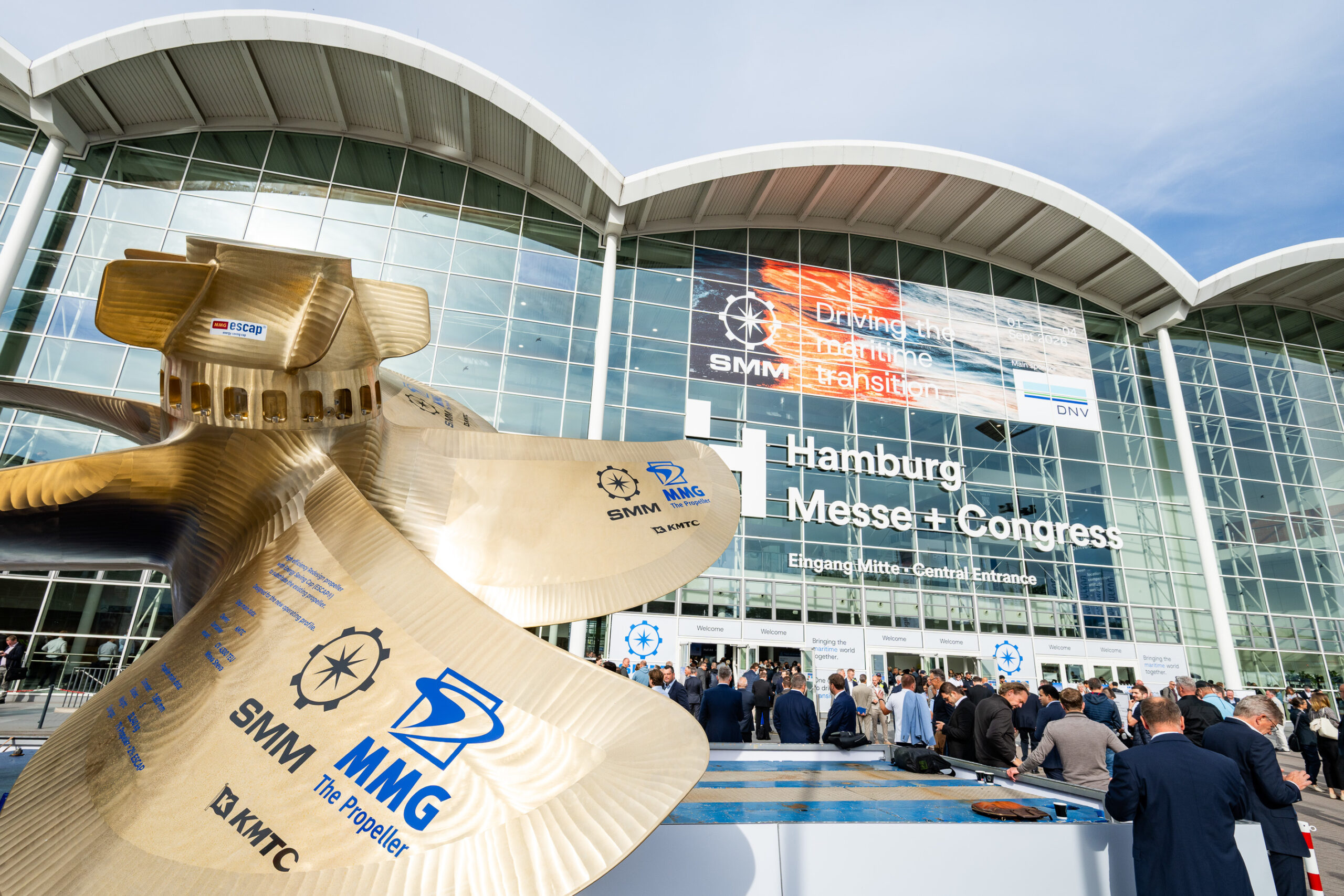
Held in Hamburg, SMM 2026 attracted more than 50,000 visitors from 134 countries and welcomed around 2,300 exhibitors representing 66 nations. The event brought together shipowners, shipbuilders, technology providers, suppliers, naval organisations and industry bodies to discuss the future of shipping, offshore operations and maritime technology.
According to Claus Ulrich Selbach, Vice President Exhibitions Maritime & Energy at Hamburg Messe und Congress, the overriding message from this year’s event was one of confidence and determination.
Despite economic and regulatory challenges, companies continue to invest, pursue innovation and build strategic partnerships. Across the exhibition halls and conference programme, there was a strong consensus that many of the technologies needed to address current industry challenges already exist and simply need to be deployed more quickly.
Maritime Security Moves to the Top of the Agenda
One of the clearest themes emerging from SMM 2026 was the increased emphasis on security and resilience.
The newly introduced Naval Hall B8 became a focal point for discussions surrounding maritime defence, critical infrastructure protection and the future of naval technology. The MS&D Conference & Expo, alongside the Naval Stage programme, attracted significant attention from international navies, defence contractors, maritime suppliers and dual-use technology providers.
Key discussions focused on:
- Unmanned maritime systems
- Advanced sensor technologies
- Cybersecurity solutions
- Protection of critical maritime infrastructure
- Enhanced operational readiness
- Faster defence procurement
Industry leaders stressed that while environmental targets remain important, immediate security concerns demand urgent action.
Klaus Deleroi, Managing Director of REINTJES, highlighted the growing need for faster implementation and procurement across the maritime defence sector. He noted that many of the technologies needed to strengthen maritime security already exist and are ready for deployment. The challenge is no longer innovation alone, but accelerating adoption.
At the MS&D Conference, Vice Admiral Jan Christian Kaack used his final public appearance as Chief of the German Navy to emphasise the importance of operational readiness, streamlined procurement processes and increased investment in autonomous and unmanned systems.
Decarbonisation Remains a Core Industry Objective
Although security dominated many discussions, sustainability and emissions reduction remained high on the conference agenda.
The newly established Energy Efficiency Hub showcased practical technologies capable of reducing fuel consumption and lowering vessel emissions today. Twenty-four companies demonstrated solutions covering propulsion optimisation, alternative fuels, energy management and emissions control technologies.
The strong attendance at the Global Maritime Environmental Congress (gmec) reinforced the industry’s continuing commitment to meeting environmental goals and regulatory requirements.
Many exhibitors reported growing interest in technologies that can deliver measurable operational savings while simultaneously supporting sustainability targets.
Artificial Intelligence Moves From Theory to Reality
A noticeable shift could also be seen in conversations about digitalisation and Artificial Intelligence.
Previous industry discussions often centred on the future potential of AI. At SMM 2026, the focus had clearly moved towards implementation and real-world application.
Visitors and exhibitors explored practical uses for AI across several areas, including:
- Fleet optimisation
- Predictive maintenance
- Autonomous vessel operations
- Situational awareness systems
- Operational risk management
- Fuel efficiency improvements
The discussion was no longer about whether AI will change maritime operations. The conversation has progressed to how quickly companies can integrate these technologies into everyday workflows.
This mirrors wider industry trends, where vessel operators and offshore contractors are increasingly investing in data-driven systems that improve reliability, reduce downtime and support smarter decision-making.
Strong Investment Despite Global Uncertainty
One of the most encouraging takeaways from SMM 2026 was the continued willingness to invest.
Exhibitors consistently reported productive meetings, strong visitor quality and genuine commercial opportunities. Decision-makers were highly visible throughout the event, creating an environment focused on practical business outcomes rather than simply networking.
Helena Sannicolo, Vice President Marketing & Communications for Alfa Laval’s Ocean Division, described the event as highly successful. While acknowledging continued market uncertainty, she pointed to strong demand for technologies capable of delivering both operational efficiency and environmental performance.
For many suppliers, the appetite for investment remains strong when solutions can demonstrate proven value and measurable returns.
International Participation Highlights Global Reach
SMM’s status as one of the world’s most important maritime exhibitions was reflected in the diversity of its international attendance.
The event hosted 26 national pavilions and official delegations from approximately 30 countries. More than 70 per cent of exhibiting companies travelled from outside Germany.
Notably, India, Cyprus and Brazil participated with dedicated national pavilions for the first time, highlighting the continued expansion and internationalisation of the maritime sector.
This growing global engagement underscores the importance of international collaboration as shipping, offshore energy and maritime technology continue to evolve.
Looking Ahead
A consistent theme throughout SMM 2026 was the industry’s desire to accelerate progress. Whether discussing defence, energy efficiency, AI or sustainability, participants repeatedly emphasised the need to move from planning to implementation.
The maritime sector is facing multiple challenges simultaneously, but the overall mood in Hamburg remained positive. Companies are investing, forming partnerships and adopting technologies that can address today’s operational demands while preparing for future opportunities.
Maritime security and defence will remain prominent industry topics over the coming years. The next MS&D Conference & Expo is scheduled for 8-9 December 2027 at the CCH Congress Center Hamburg, alongside the Global Security and Defence Summit.
Meanwhile, the maritime industry will return to Hamburg for the next edition of SMM from 5 to 8 September 2028.
If SMM 2026 demonstrated anything, it is that the global maritime industry is not standing still. The focus may be shifting, but the commitment to innovation, investment and collaboration remains stronger than ever.