How Autonomous Underwater Vehicles Are Reducing Offshore Project Costs
Saturday, 10th October 2026
The offshore industry is under constant pressure to reduce costs, improve safety and deliver projects faster.
Whether the work involves offshore wind farms, subsea cables, oil and gas infrastructure or environmental surveys, operators are looking for technologies that can improve efficiency without compromising data quality.
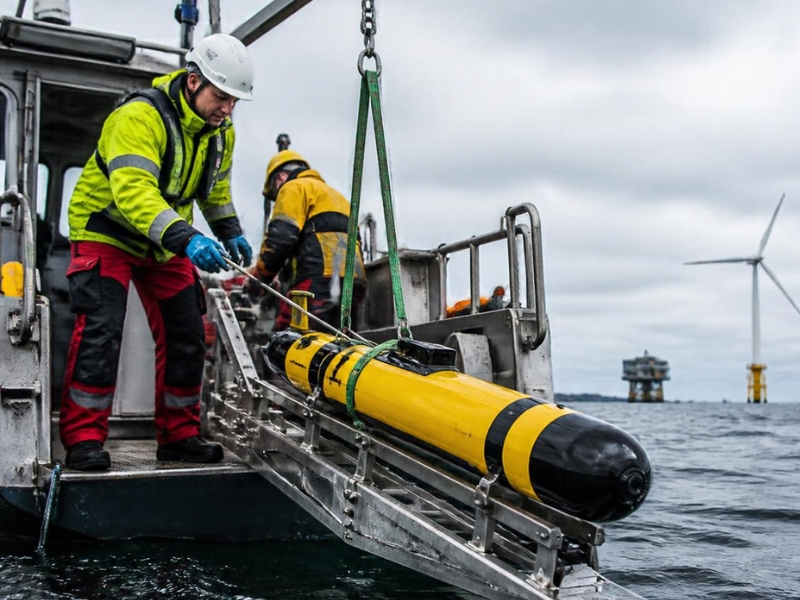
One technology making a significant impact is the Autonomous Underwater Vehicle, commonly known as an AUV.
Unlike traditional Remotely Operated Vehicles (ROVs), which require a support vessel, tether systems and dedicated operators, AUVs can be deployed to carry out complex underwater missions independently.
They collect data, map the seabed, inspect infrastructure and return detailed results, often at a fraction of the cost of conventional survey methods.
As offshore projects move into deeper waters and more challenging environments, AUVs are becoming one of the most valuable tools in the marine sector.
What Is an Autonomous Underwater Vehicle?
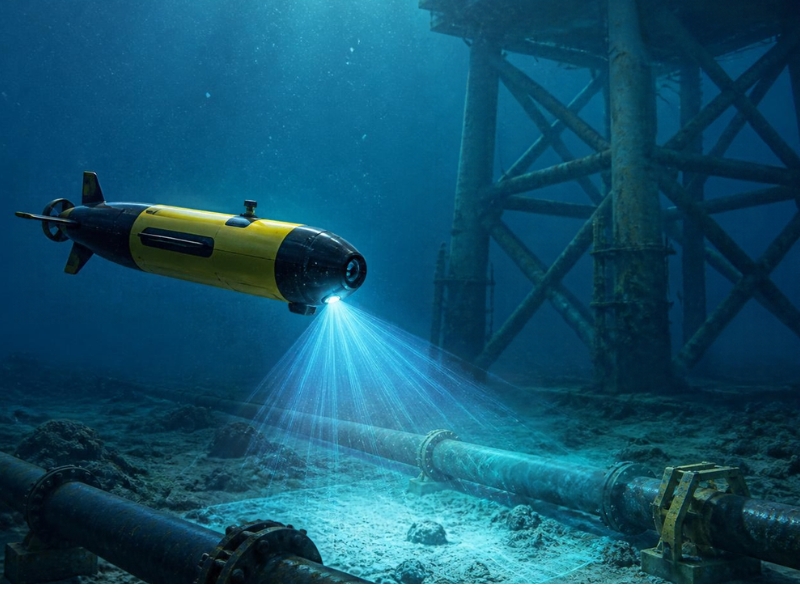
An AUV is an untethered underwater robot programmed to carry out tasks without constant human control.
Using onboard sensors, navigation systems and advanced software, AUVs can:
- Survey large areas of seabed
- Inspect subsea pipelines
- Monitor offshore wind infrastructure
- Map cable routes
- Collect environmental data
- Perform bathymetric surveys
- Identify underwater hazards
Because they operate independently, they reduce the need for large survey vessels and complex offshore support operations.
According to research published in the scientific journal Sensors, AUVs are increasingly being used for offshore surveys because they offer a lower-cost alternative to traditional survey vessels while providing high-quality data collection capabilities.
Why Offshore Surveys Have Traditionally Been Expensive
Conventional offshore surveys normally require:
- A large survey vessel
- Specialist sensors
- ROV systems
- Multiple technicians
- Marine crews
- Long mobilisation periods
Vessel day rates alone can reach tens of thousands of pounds per day.
Weather delays create another major cost burden.
Industry analysis of offshore wind survey operations found that around 51% of survey vessel time can be lost due to weather-related waiting periods, while only around 36% of available time is spent actively surveying.
Every day a vessel sits waiting in port represents a direct cost to project developers.
How AUVs Reduce Survey Costs
The biggest advantage of AUV technology is efficiency.
Instead of relying on large support vessels for extended periods, operators can deploy AUVs to perform missions autonomously.
This delivers savings in several areas.
Reduced Vessel Time
Support vessels often represent the largest single cost in any offshore survey campaign.
AUVs reduce dependence on these vessels because they spend less time on site and can cover larger areas in shorter periods.
According to offshore survey specialist Acteon, AUVs can gather seabed and asset data at between five and six times the speed of conventional ROV surveys.
Faster surveys mean fewer vessel days and significantly lower project costs.
Reduced Personnel Requirements
Traditional survey operations may involve:
- Vessel crews
- ROV pilots
- Survey engineers
- Data analysts
- Marine inspectors
AUV operations require fewer offshore personnel, reducing accommodation, transport and operational expenses.
Improved Weather Resilience
AUVs work below the surface where conditions are often more stable than at sea level.
This allows survey work to continue in conditions where conventional vessel-based activities would be delayed.
The result is improved project scheduling and fewer weather-related interruptions.
AUVs and Offshore Wind Development
Offshore wind has become one of the most important growth sectors for marine technology.
Every wind farm requires detailed seabed surveys before foundations, cables and structures can be installed.
AUVs are helping developers complete these surveys faster and more economically.
They are widely used for:
- Geophysical surveys
- Cable route investigations
- Seabed classification
- UXO detection support
- Foundation site assessments
Industry observers have warned that offshore wind development could face vessel shortages as demand increases.
Portable and autonomous AUV systems help address this challenge by reducing dependence on specialist survey fleets.
Better Data, Faster Decisions
Reducing costs is important, but so is improving data quality.
Modern AUVs are equipped with advanced systems including:
- Multibeam echo sounders
- Side-scan sonar
- Synthetic Aperture Sonar (SAS)
- Sub-bottom profilers
- High-definition cameras
- Environmental sensors
These technologies provide highly detailed seabed information that supports engineering design, route planning and risk management.
The ability to gather high-resolution data quickly means project teams can make decisions faster and with greater confidence.
AUVs and Subsea Asset Inspection
The application of AUVs extends far beyond surveys.
Operators are increasingly using them to inspect subsea infrastructure including:
- Pipelines
- Power cables
- Manifolds
- Offshore foundations
- Wellheads
- Mooring systems
Traditional inspections often rely on ROVs and support vessels.
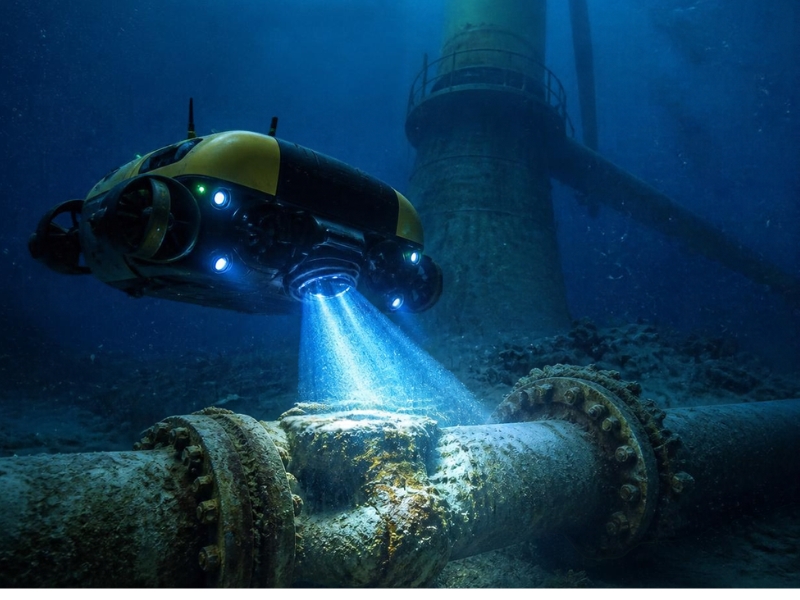
AUVs can perform many inspection tasks independently, reducing operational expenditure while increasing inspection frequency.
This approach is particularly valuable for offshore wind operators who need regular inspections across large geographic areas.
Safety Benefits That Also Reduce Costs
Every offshore project has safety obligations.
Reducing personnel exposure to offshore risks not only improves safety outcomes but also lowers operational costs.
AUV deployment reduces the need for:
- Diving operations
- Extended vessel deployments
- Manned inspection campaigns
- Repetitive offshore missions
Fewer people offshore means lower risk and reduced logistical complexity.
As the industry continues to prioritise safer operations, autonomous systems are becoming increasingly attractive.
The Growing Market for AUV Technology
Demand for autonomous underwater technology continues to increase.
According to research from MarketsandMarkets, the global AUV market is expected to grow from approximately $3.13 billion in 2025 to $4.64 billion by 2030.
Growth is being driven by:
- Offshore wind expansion
- Subsea inspection demand
- Oceanographic research
- Defence applications
- Improved battery technology
- Advances in artificial intelligence
The market is expected to continue expanding as operators seek more efficient ways to collect and analyse underwater data.
The Future of Offshore Operations
AUV technology is evolving rapidly.
Future systems are expected to include:
- Greater battery endurance
- AI-driven navigation
- Real-time cloud connectivity
- Swarm deployment capabilities
- Enhanced subsea mapping systems
- Automated anomaly detection
These developments will allow offshore operators to gather more data, complete projects faster and significantly reduce operational costs.
Industry leaders increasingly view AUVs as an essential component of digital offshore operations rather than simply another survey tool.
Key Benefits of AUV Deployment
For offshore operators, the advantages are clear:
- Lower vessel costs
- Faster survey completion
- Reduced personnel requirements
- Improved safety performance
- Better data quality
- Lower environmental impact
- Greater operational flexibility
- Reduced weather-related downtime
Takeaway
Autonomous Underwater Vehicles are changing the economics of offshore operations. By reducing vessel requirements, improving survey efficiency and delivering high-quality subsea data, AUVs are helping developers and operators reduce costs across offshore wind, subsea construction, marine surveying and energy projects.
As the offshore sector continues to embrace automation and digital technology, AUVs are set to become a standard part of the marine toolkit. Companies that adopt these systems early will benefit from improved efficiency, stronger project performance and a significant competitive advantage in an increasingly demanding offshore market.