The Rise of Intelligent Vessels: Technology Trends Shaping Offshore Marine
Friday, 6th November 2026
The offshore marine industry is entering a new era. For decades, vessel performance was primarily measured by engine power, cargo capacity and operational range.
Today, data, automation and connectivity are becoming just as important. Across offshore wind, subsea construction, commercial shipping and marine support services, a new generation of intelligent vessels is changing how work is carried out at sea.
These vessels are not simply bigger or faster than their predecessors. They are smarter. They collect data continuously, analyse operating conditions in real time and support crews with advanced decision‑making tools. In many cases, they can identify problems before human operators even know they exist.
As offshore projects become increasingly complex and environmental regulations continue to tighten, intelligent vessels are rapidly becoming one of the most important technology developments shaping the future of marine operations.
What Is an Intelligent Vessel?
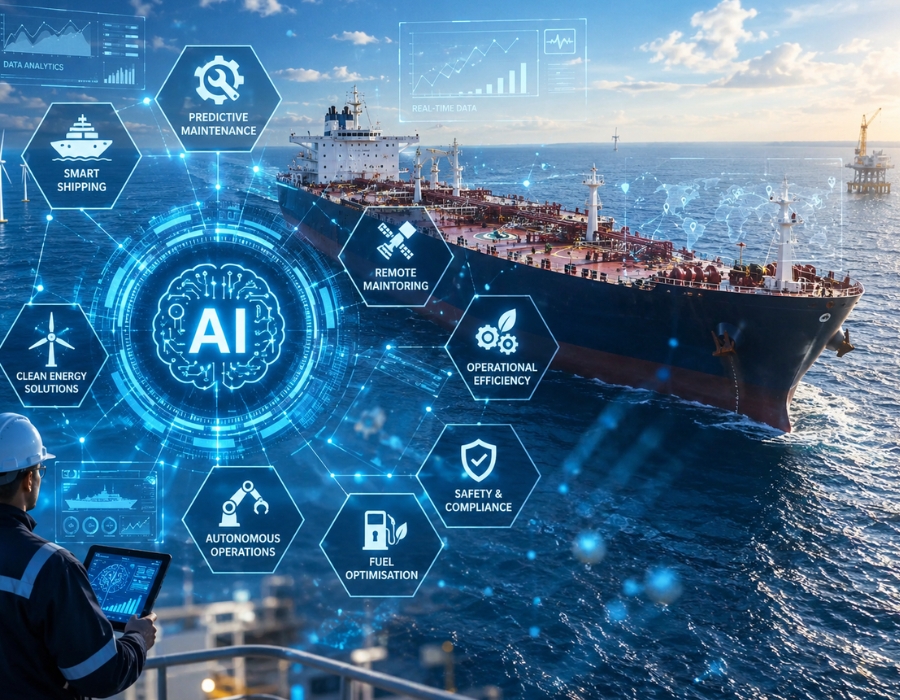
An intelligent vessel uses connected systems, sensors, automation and advanced software to improve performance, safety and efficiency.
Instead of relying solely on human monitoring and manual processes, these vessels gather information from multiple onboard systems and transform it into useful operational insights.
An intelligent vessel typically integrates:
- Real-time performance monitoring
- Predictive maintenance systems
- Artificial Intelligence (AI)
- Advanced navigation technology
- Energy management systems
- Digital twins
- Remote diagnostics
- Automated reporting
These technologies work together to help crews make better decisions while reducing downtime and operational costs.
The Growth of Data-Driven Operations
Modern offshore vessels generate vast amounts of operational data every day.
Engines, hydraulic systems, propulsion units, cranes, generators and navigation equipment all produce performance information. Historically, much of this data remained unused or was reviewed only after an issue occurred.
Today, intelligent vessel systems continuously analyse this information.
Operators can monitor:
- Fuel consumption
- Engine efficiency
- Machinery health
- Environmental conditions
- Vessel performance
- Equipment utilisation
This allows offshore teams to spot inefficiencies and address problems before they become major operational issues.
According to classification society DNV, digitalisation and connected vessel technologies are becoming increasingly important in improving vessel efficiency, reducing emissions and supporting safer operations.
Artificial Intelligence Moves Offshore
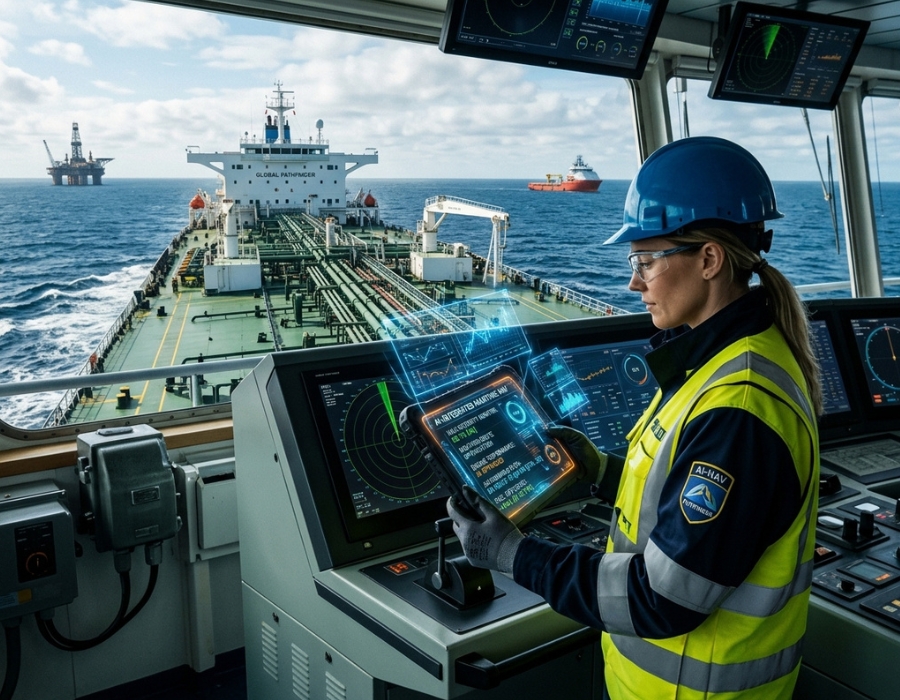
Artificial Intelligence is playing a growing role across the marine sector.
AI systems can process thousands of data points simultaneously and identify patterns that human operators may miss.
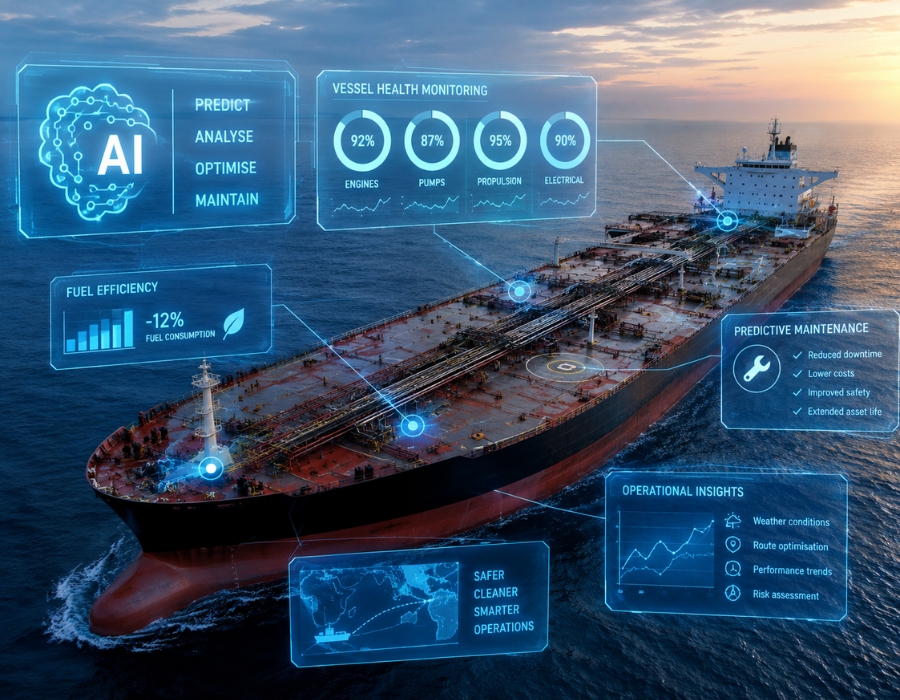
Applications include:
Predictive Maintenance
AI can analyse vibration, temperature, pressure and performance data to identify equipment degradation before failures occur.
Instead of reacting to breakdowns, operators can schedule maintenance when it is most convenient.
Fuel Optimisation
AI systems help optimise engine settings, route planning and power management to reduce fuel consumption.
Situational Awareness
Advanced AI-powered navigation systems are being developed to improve vessel awareness by analysing radar, camera and sensor inputs simultaneously.
Operational Planning
AI can evaluate weather forecasts, project schedules and asset availability to improve operational efficiency.
These capabilities are becoming increasingly valuable for offshore support vessels, survey ships and construction assets working under tight project deadlines.
Predictive Maintenance Is Reducing Downtime
Unexpected equipment failures remain one of the biggest challenges facing vessel operators.
Mechanical breakdowns often result in:
- Lost charter revenue
- Delayed projects
- Emergency repairs
- Increased safety risks
Predictive maintenance systems use sensors and machine-learning algorithms to monitor the health of critical machinery.
Instead of fixed maintenance schedules, operators maintain equipment based on actual condition.
This approach allows vessel operators to:
- Extend equipment life
- Reduce maintenance costs
- Improve reliability
- Minimise downtime
For offshore vessels operating in remote locations, these benefits are particularly significant.
Digital Twins Are Changing Asset Management
One of the most promising developments in marine technology is the use of digital twins.
A digital twin is a virtual representation of a physical asset.
Vessel operators can create digital models of:
- Entire vessels
- Engines
- Propulsion systems
- Offshore structures
- Hydraulic equipment
By continuously updating these models with live operational data, operators gain a deeper understanding of asset performance.
Digital twins help engineering teams:
- Simulate operating conditions
- Predict equipment failures
- Evaluate maintenance strategies
- Improve operational planning
Many major marine manufacturers are investing heavily in digital twin technology as part of their long-term digitalisation strategies.
Autonomous and Semi-Autonomous Vessels
While fully autonomous commercial vessels remain relatively uncommon, automation is steadily expanding throughout the industry.
Many modern vessels already use semi-autonomous technologies for:
- Station keeping
- Route optimisation
- Collision avoidance
- Dynamic positioning support
- Machinery management
Uncrewed Surface Vessels (USVs) are also gaining popularity across offshore surveying, environmental monitoring and subsea inspection projects.
These systems reduce operational costs while improving safety by removing personnel from higher-risk environments.
Smarter Navigation Systems
Navigation technology has evolved considerably over the past decade.
Today’s intelligent vessels use a combination of:
- Electronic chart systems
- Radar integration
- GPS positioning
- AIS tracking
- Camera systems
- Sensor fusion platforms
These technologies provide improved situational awareness and support safer operations in congested waterways and offshore work sites.
Future developments are expected to integrate AI more deeply into navigation systems, assisting crews with route planning, collision avoidance and environmental analysis.
Energy Efficiency Is Driving Innovation
Reducing emissions has become a major focus across the maritime sector.
Intelligent vessels help operators meet environmental goals through improved energy management.
Modern systems can optimise:
- Engine loading
- Power generation
- Battery utilisation
- Fuel consumption
- Thruster performance
According to the International Maritime Organization (IMO), reducing greenhouse gas emissions remains a key objective for the global shipping industry.
Intelligent vessel technologies provide practical tools for achieving these goals while maintaining operational performance.
Connectivity Is Becoming Essential
Reliable communication is now central to offshore operations.
Modern vessels increasingly rely on satellite connectivity and cloud-based platforms to support:
- Remote diagnostics
- Fleet monitoring
- Performance analysis
- Crew communications
- Real-time reporting
This connectivity allows shore-based teams to monitor vessel performance and provide technical support without the need for onboard visits.
The result is better decision-making and improved operational efficiency.
Offshore Wind Is Accelerating Adoption
The rapid growth of offshore wind is helping drive demand for intelligent vessel technologies.
Offshore wind projects rely on:
- Crew transfer vessels
- Service operation vessels
- Installation ships
- Survey vessels
- Cable-laying assets
These vessels operate on tight schedules and require high levels of availability.
Intelligent systems help contractors reduce downtime, optimise maintenance schedules and improve fuel efficiency.
As offshore wind projects move further offshore and increase in scale, demand for smarter vessels is expected to grow significantly.
The Future of Intelligent Shipping
The intelligent vessel is no longer a concept of the future.
Many of the technologies discussed here are already operational across offshore fleets worldwide.
Over the next decade, further developments are expected in:
- Artificial Intelligence
- Autonomous navigation
- Predictive maintenance
- Digital twins
- Fleet optimisation
- Alternative-fuel integration
These innovations will continue to reshape how marine operations are planned, managed and executed.
Takeaway
The offshore marine industry is becoming increasingly driven by data, automation and connectivity. Intelligent vessels are helping operators improve safety, reduce fuel consumption, minimise downtime and manage assets more effectively. From predictive maintenance and digital twins to AI-assisted navigation and autonomous systems, the technologies shaping today’s vessels are laying the foundations for the next generation of offshore operations.
For marine operators, shipowners and offshore contractors, embracing intelligent vessel technology is no longer simply about innovation. It is becoming essential for remaining competitive in a rapidly changing industry.