SubSalve USA Schwer Marine Fittings Hystat Hydraulic Cylinder Manufacturers BP Norse Marine Southbay Marine Services

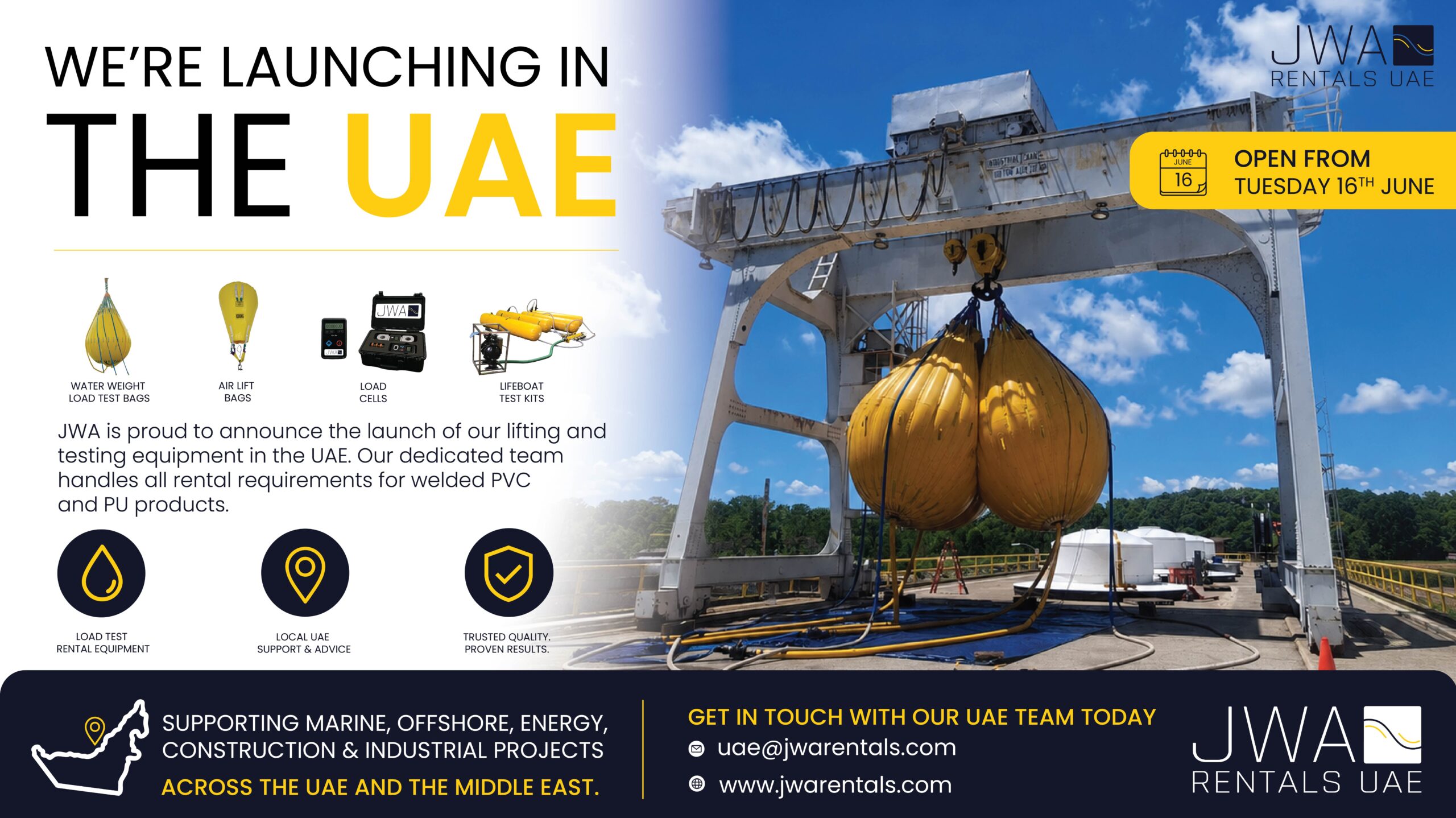
JWA Rentals Expands UAE Operations with New Abu Dhabi Facility

Tuesday, 16th June 2026

Abu Dhabi, United Arab Emirates – 16 June 2026

JWA Rentals, a leading global provider of specialised load testing and subsea lifting equipment, has announced its strategic expansion into the United Arab Emirates with the launch of a new facility in Abu Dhabi.

The new operation will provide both rental and sales services for high-performance subsea lifting bags, water-weight load-test bags, and associated equipment, supporting the region’s growing offshore, marine, energy, and decommissioning industries.

The expansion marks another significant step in JWA Rentals’ international growth strategy, complementing its established depots across the United Kingdom, United States, Netherlands, Greece and New Zealand. By establishing a presence in the UAE, the company aims to deliver faster mobilisation, reduced lead times and dedicated local support for customers throughout the Middle East.

Supporting Offshore, Energy and Marine Projects Across the Middle East

JWA Rentals offers a comprehensive portfolio of manufacturer-supported equipment designed to perform in demanding offshore and marine environments. Its range includes premium air lift bags, surface and subsea buoyancy solutions, water-weight load-testing bags, and bespoke-engineered products developed for challenging operational conditions.

The company’s equipment is trusted worldwide across multiple sectors, including oil and gas, renewable energy, marine construction, salvage operations, defence projects and emergency response services.

Chris Dawson, Group CEO of JWA Rentals, said:

“The launch of our UAE facility represents an important milestone for the business. The Middle East continues to be a major centre for offshore energy and marine projects, and we are delighted to bring our expertise, high-quality equipment and responsive customer service directly to the region.

“Our objective is to help clients deliver projects more efficiently through reliable, readily available subsea lifting and load testing solutions backed by expert technical support.”

Comprehensive Rental, Sales and Technical Support Services

The new Abu Dhabi facility will provide a full range of services, including equipment rental, sales, servicing and technical support. Customers will benefit from flexible rental packages, rapid deployment capabilities and access to both standard and custom-engineered products supported by JW Automarine’s manufacturing expertise.

The expansion reinforces JWA Rentals’ commitment to quality, safety and innovation while strengthening its ability to support offshore and marine projects throughout the Middle East.

For further information about JWA Rentals’ products and services in the UAE, visit www.jwarentals.com or contact the local team directly.

Contact Information

Email: uae@jwarentals.com

Phone: +971 567490114

About JWA Rentals

JWA Rentals is part of the JW Automarine Group and is recognised globally for the rental, sales and servicing of load testing and subsea lifting equipment.

Since launching in 2019, the company has delivered manufacturer-supported solutions that help clients across the energy, marine and offshore sectors meet demanding project schedules with confidence. Through a strong focus on quality, durability and customer support, JWA Rentals continues to expand its global presence and serve projects worldwide.

Associated Listing:
Liferafts International DiveCo Marine Civils Sealane Maritime Engineering
SubSalve USA Schwer Marine Fittings Hystat Hydraulic Cylinder Manufacturers BP Norse Marine Southbay Marine Services

Beyond the Horizon: The Technologies Driving Offshore Marine Into the Future

Tuesday, 5th May 2026

The offshore marine industry has always been shaped by innovation. From the earliest steel‑hulled vessels to dynamic positioning systems and subsea robotics, each leap forward has expanded what’s possible at sea.

Today, the pace of change is accelerating faster than ever. Digitalisation, automation, sustainability and advanced engineering are redefining how offshore vessels operate, how projects are delivered and how the industry prepares for the decades ahead.

The technologies emerging now aren’t just incremental improvements—they’re transformative forces pushing the marine sector beyond the horizon.

Here’s a look at the innovations driving offshore marine into the future.

Autonomous and Remote‑Operated Vessels

Autonomy is no longer a futuristic concept—it’s becoming a practical reality. Offshore operators are increasingly adopting:

  • Uncrewed Surface Vessels (USVs) for survey, inspection and monitoring
  • Remote‑operated workboats controlled from onshore command centres
  • Semi‑autonomous navigation systems that reduce crew workload
  • Collision‑avoidance AI that enhances safety in congested waters

These vessels reduce operational costs, improve safety and allow continuous operations in conditions that would challenge traditional crews.

Next‑Generation Dynamic Positioning (DP)

Dynamic positioning has long been essential for offshore construction, drilling and wind installation. The next wave of DP technology includes:

  • AI‑assisted station‑keeping
  • Fuel‑optimised thruster control
  • Redundant, cyber‑secure DP networks
  • Integration with real‑time weather and metocean data

These advancements allow vessels to maintain position more efficiently, reducing fuel burn and emissions while improving operational precision.

Hybrid and Low‑Emission Propulsion

Hybrid Diesel‑Electric Propulsion

Sustainability is reshaping the offshore sector. Vessel operators are investing in propulsion systems that reduce environmental impact without compromising performance.

Key developments include:

  • Hybrid diesel‑electric systems
  • Battery‑powered offshore support vessels
  • Hydrogen and methanol‑ready engines
  • Advanced energy‑management systems
  • Shore‑power compatibility for port operations

These technologies support global decarbonisation goals and help operators meet tightening emissions regulations.

Advanced Robotics and Subsea Automation

Resident ROV

The subsea environment is one of the most challenging workplaces on Earth. Robotics are transforming how offshore companies inspect, repair and maintain underwater assets.

Emerging technologies include:

  • Resident ROVs that live subsea and operate autonomously
  • AUVs (Autonomous Underwater Vehicles) for long‑range surveys
  • Robotic manipulators capable of complex repair tasks
  • AI‑driven inspection tools that detect faults earlier

These systems reduce the need for diver intervention, improve safety and deliver more accurate data.

Digital Twins and Predictive Maintenance

Digitalisation is revolutionising vessel management. Digital twins—virtual replicas of vessels, engines or entire offshore structures—allow operators to simulate performance, predict failures and optimise maintenance.

Benefits include:

  • Real‑time monitoring of critical systems
  • Predictive maintenance based on data, not guesswork
  • Reduced downtime and repair costs
  • Improved asset lifespan
  • Enhanced safety through early fault detection

For fleet operators, digital twins are becoming indispensable tools for long‑term planning.

Smart Deck Machinery and Intelligent Lifting Systems

Load Sensing Winch

Deck equipment is becoming smarter, safer and more efficient. Innovations include:

  • Load‑sensing winches and cranes
  • Automated tension control
  • Remote monitoring of hydraulic systems
  • Predictive diagnostics for lifting gear

These technologies reduce the risk of lifting incidents and improve operational control during offshore construction and maintenance.

High‑Bandwidth Offshore Connectivity

Reliable connectivity is the backbone of modern offshore operations. New communication technologies are enabling:

  • Real‑time data transfer from vessels and subsea assets
  • Remote diagnostics and troubleshooting
  • High‑definition video for ROV operations
  • Crew welfare improvements through better internet access

Satellite networks, 5G offshore trials and low‑orbit constellations are all contributing to a more connected marine environment.

Modular and Rapid‑Deployment Offshore Infrastructure

As offshore wind and marine energy projects expand, the industry is embracing modularity. Innovations include:

  • Modular barges and floating platforms
  • Rapid‑assembly offshore structures
  • Prefabricated subsea modules
  • Containerised power and control systems

These solutions reduce installation time, improve flexibility and support operations in remote or challenging locations.

Cybersecurity for the Digital Ocean

With increased digitalisation comes increased risk. Offshore vessels and infrastructure are now prime targets for cyber threats. The industry is responding with:

  • Hardened DP and navigation systems
  • Encrypted communication networks
  • Real‑time threat monitoring
  • Cyber‑secure vessel management platforms

Cyber resilience is becoming as important as physical safety.

The Future: A Smarter, Cleaner, More Autonomous Offshore Industry

The technologies shaping the future of offshore marine operations share a common theme: they make the industry safer, more efficient and more sustainable. From autonomous vessels and hybrid propulsion to digital twins and subsea robotics, the innovations emerging today will define the next generation of offshore work.

The horizon is expanding—and the companies that embrace these technologies will be the ones leading the industry forward.


Liferafts International DiveCo Marine Civils Sealane Maritime Engineering
SubSalve USA Schwer Marine Fittings Hystat Hydraulic Cylinder Manufacturers BP Norse Marine Southbay Marine Services

Fuel Efficiency at Sea: How Modern Diesel Engines Are Becoming Cleaner and Smarter

Tuesday, 5th May 2026

Marine diesel engines have long been the workhorses of the offshore and commercial shipping industries.

They power everything from fishing vessels and workboats to offshore support ships and deep‑sea cargo carriers.

But as global regulations tighten and fuel costs rise, the pressure to improve efficiency and reduce emissions has never been greater.

Fortunately, modern diesel engine technology is evolving rapidly. Today’s systems are cleaner, smarter and significantly more fuel‑efficient than their predecessors—thanks to advances in engineering, digitalisation and alternative fuel integration.

Below is a deep dive into the innovations reshaping marine propulsion, supported by real‑world data and industry statistics.

Why Fuel Efficiency Matters More Than Ever

Cruise Ship Diesel Engines

Fuel is one of the largest operational expenses for marine vessels—often accounting for 30–50% of total operating costs depending on vessel type and duty cycle. Even a small improvement in efficiency can translate into major savings over a vessel’s lifetime.

Environmental pressure is also increasing:

  • The IMO 2020 sulphur cap reduced allowable sulphur content in marine fuels from 3.5% to 0.5%, pushing operators toward cleaner engines and fuels.
  • The IMO’s 2030 target aims for a 40% reduction in carbon intensity compared to 2008 levels.
  • By 2050, the IMO aims to cut total greenhouse gas emissions from shipping by at least 50%.

Modern diesel engines are a key part of meeting these targets—especially as hybrid and alternative‑fuel systems continue to mature.

1 – High‑Pressure Fuel Injection: More Power, Less Waste

One of the biggest leaps in diesel efficiency comes from advanced fuel‑injection systems.

How it works

Modern engines use common‑rail injection at pressures exceeding 2,000 bar, allowing extremely fine atomisation of fuel.

Why it matters

  • More complete combustion
  • Lower fuel consumption
  • Reduced particulate emissions
  • Smoother engine performance

Efficiency gain: Up to 5–8% fuel savings compared to older mechanical injection systems.

2 – Turbocharging and Two‑Stage Boosting

Turbochargers have been standard for decades, but new designs are pushing efficiency even further.

Two‑stage turbocharging

This system uses a low‑pressure and high‑pressure turbocharger in sequence, improving air delivery across a wider RPM range.

Benefits

  • Higher power output from the same displacement
  • Lower specific fuel consumption
  • Reduced smoke and NOx emissions

Efficiency gain: Up to 10% improvement in fuel economy on certain engine models.

3 – Electronic Engine Management Systems

Electronic Engine Management Systemsngine Management Systems

Digitalisation is transforming marine propulsion. Modern diesel engines now feature intelligent control units that continuously optimise performance.

Smart engine controls adjust for:

  • Load changes
  • Sea state
  • Fuel quality
  • Temperature
  • Emissions limits

Real‑world impact

According to MAN Energy Solutions, electronic engine management can reduce fuel consumption by 3–5% and cut NOx emissions by up to 20%.

4 – Waste Heat Recovery Systems (WHRS)

Marine engines waste a significant amount of energy as heat—up to 50% of total fuel energy. Waste Heat Recovery Systems capture this heat and convert it into usable power.

Uses include:

  • Generating electricity
  • Powering auxiliary systems
  • Reducing load on generators

Efficiency gain: Large vessels can achieve 5–10% fuel savings, with some systems reaching 12% under optimal conditions.

5 – Hybrid Diesel‑Electric Propulsion

Hybrid Diesel‑Electric Propulsion

Hybrid systems are becoming increasingly common in offshore support vessels, ferries and workboats.

How hybrids improve efficiency

  • Engines run at optimal RPM
  • Batteries handle low‑load operations
  • Regenerative charging during braking or DP operations
  • Reduced idling and fuel burn

Results

DNV reports that hybrid systems can reduce fuel consumption by 15–25%, depending on vessel type and duty cycle.

6 – Cleaner Fuels and Advanced Combustion

Modern diesel engines are designed to run on a wider range of cleaner fuels, including:

  • Low‑sulphur marine diesel
  • Ultra‑low sulphur diesel (ULSD)
  • Biodiesel blends
  • Synthetic diesel
  • LNG‑assisted dual‑fuel systems

Environmental impact

Switching from high‑sulphur fuel oil to low‑sulphur diesel reduces SOx emissions by over 99% and particulate matter by up to 80%.

7 – Digital Twins and Predictive Maintenance

Digital twins—virtual models of engines—allow operators to simulate performance and predict failures before they occur.

Benefits

  • Reduced downtime
  • Optimised fuel burn
  • Early detection of inefficiencies
  • Better long‑term planning

According to Wärtsilä, predictive maintenance can reduce fuel consumption by 2–4% and cut unplanned downtime by up to 50%.

8 – Hull and Propeller Optimisation

Even the most efficient engine can’t perform well if the hull and propeller are inefficient.

Key improvements

  • Low‑friction hull coatings
  • Propeller polishing
  • High‑efficiency propeller designs
  • Energy‑saving devices (ESDs)

Impact

A clean hull alone can improve fuel efficiency by up to 10%, while propeller optimisation can add another 3–5%.

The Future: Smarter, Cleaner, More Connected Diesel Power

Marine diesel engines aren’t going anywhere soon. Instead, they’re evolving—becoming cleaner, more efficient and more intelligent. The combination of advanced engineering, digital optimisation and hybrid integration is pushing the industry toward a future where vessels burn less fuel, emit fewer pollutants and operate with greater reliability.

What’s next?

  • AI‑driven engine optimisation
  • Hydrogen‑ready diesel engines
  • Fully integrated hybrid propulsion
  • Zero‑emission auxiliary systems
  • Autonomous engine monitoring

The result is a new generation of marine diesel technology that supports both operational performance and global sustainability goals.

Liferafts International DiveCo Marine Civils Sealane Maritime Engineering
SubSalve USA Schwer Marine Fittings Hystat Hydraulic Cylinder Manufacturers BP Norse Marine Southbay Marine Services

Poseidon Jackup JV: First C7 Platform Christened

Thursday, 16th April 2026

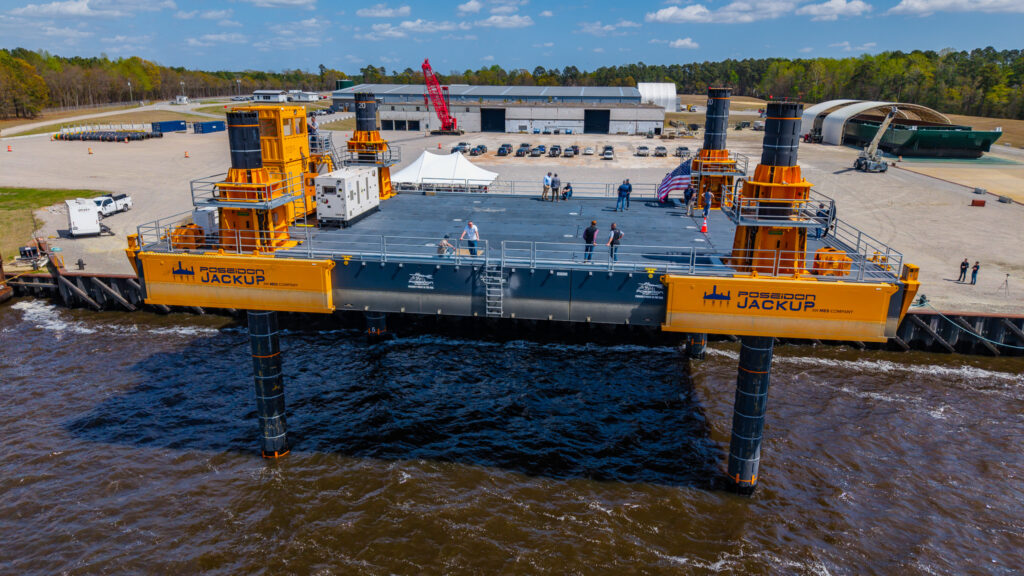
The first C7 platform of Poseidon Jackup has been officially christened, marking a significant milestone for the joint venture’s operations in North America.

The christening represents the transition from concept and preparation to operational reality and highlights the collaboration between Combifloat and its U.S.-based partners.

Building on the official launch of Poseidon Jackup, the event underscores a shared ambition to introduce proven, modular jack-up technology to the United States and Canada. The initiative is aimed at delivering stable, purpose-built solutions tailored to the demands of complex marine construction environments.

The first C7 jack-up also reflects growing confidence among clients and stakeholders in the joint venture’s capabilities. With U.S.-based manufacturing, Jones Act–compliant execution, and Combifloat’s established engineering expertise forming the foundation of the venture, Poseidon Jackup is positioned to support infrastructure, energy, and marine projects across the region.

The company aims to set high standards for safety, reliability, and operational performance as it expands its presence in the North American market.

Associated Listing:
Liferafts International DiveCo Marine Civils Sealane Maritime Engineering
SubSalve USA Schwer Marine Fittings Hystat Hydraulic Cylinder Manufacturers BP Norse Marine Southbay Marine Services

Marine Fleet Maintenance: The Companies Keeping Marine Vessels in Top Condition

Saturday, 4th April 2026

Keeping a marine fleet operational is no small task. Offshore vessels, workboats, barges and commercial craft operate in some of the harshest environments on the planet. Saltwater, vibration, heavy loads and continuous use all take their toll.

Without rigorous maintenance and the support of specialist fleet maintenance companies, even the most robust vessel can quickly fall into disrepair.

Behind every reliable fleet is a network of skilled marine engineers, fabricators, hydraulic specialists and repair teams who ensure vessels remain safe, compliant and ready for work.

Among the many companies providing these essential services, several stand out for their expertise, capability and long‑standing reputation—such as Southbay Civil Engineering Ltd, Breakwater Marine Engineers, and JD Neuhaus Ltd.

This article explores what it truly takes to keep a fleet in top condition and highlights the vital role these companies play in supporting the wider marine industry.

Why Marine Fleet Maintenance Matters

Ship Maintenance & Repairs

A well‑maintained vessel is safer, more efficient and more cost‑effective. Regular maintenance prevents breakdowns, extends equipment lifespan and ensures compliance with class and regulatory requirements.

For operators, this means fewer delays, reduced repair costs and improved operational reliability.

Fleet maintenance typically includes:

  • Hull inspections and repairs
  • Engine and propulsion servicing
  • Hydraulic system maintenance
  • Structural fabrication and welding
  • Winch, crane and lifting gear servicing
  • Electrical and control system checks
  • Dry‑docking and underwater repairs
  • Emergency breakdown response

Each of these tasks requires specialist knowledge and equipment—something only experienced marine engineering companies can provide.

Southbay Civil Engineering Ltd: Structural Strength and Marine Expertise

Southbay Civil Engineering Ltd is known for its work on marine structures, but its expertise extends into vessel maintenance and repair. Their engineering teams understand the demands placed on offshore and coastal vessels, particularly those operating in heavy‑duty environments.

Their capabilities include:

  • Steelwork fabrication and structural repairs
  • Quay and berth maintenance supporting vessel operations
  • Welding and reinforcement of hull and deck structures
  • Marine civils expertise that benefits fleet operators using port infrastructure

Their combination of civil engineering and marine knowledge makes them a valuable partner for operators needing robust, long‑lasting repairs and modifications.

Breakwater Marine Engineers: Precision Engineering for Demanding Conditions

Breakwater Marine Engineers specialise in precision mechanical work that keeps vessels running smoothly. Their services cover a wide range of essential maintenance tasks, from engine overhauls to hydraulic system repairs.

They are known for:

  • Mechanical and hydraulic engineering
  • Machining and component refurbishment
  • Engine servicing and diagnostics
  • Fabrication and welding for vessel structures
  • On‑site and afloat repair services

Breakwater’s ability to respond quickly and work directly on vessels—whether in port or at anchor—makes it a trusted name for operators who cannot afford downtime.

JD Neuhaus Ltd: Lifting Solutions Built for the Marine Environment

JD Neuhaus Ltd is a global leader in pneumatic and hydraulic lifting equipment, and its products are widely used across the marine and offshore sectors. While not a traditional repair yard, their equipment plays a crucial role in vessel maintenance and heavy‑lift operations.

Their contributions to fleet upkeep include:

  • High‑performance hoists and lifting systems
  • Equipment designed for harsh marine environments
  • Solutions for onboard maintenance, engine removal and component handling
  • Reliable lifting gear that reduces risk during repair operations

A fleet is only as safe as the equipment used to maintain it, and JD Neuhaus provides the robust lifting solutions engineers depend on.

The Hidden Complexity of Marine Maintenance

Maintaining a fleet is far more complex than simply fixing things when they break. It requires:

Preventative maintenance: Regular inspections, lubrication, testing and servicing prevent failures before they occur.

Predictive maintenance: Using data, vibration analysis and diagnostics to identify issues early.

Corrective maintenance: Repairing or replacing components that have failed or are nearing the end of their service life.

Emergency response: When a vessel breaks down offshore, rapid‑response engineers and repair teams must mobilise immediately.

Compliance and certification, Class societies require strict documentation and testing to ensure vessels remain seaworthy.

Companies like Southbay Civil Engineering Ltd, Breakwater Marine Engineers and JD Neuhaus Ltd form part of the essential ecosystem that keeps fleets safe and operational.

Why Choosing the Right Maintenance Partner Matters

Not all engineering companies are equipped to handle the demands of marine work. The right partner should offer:

  • Proven experience with vessel types similar to your own
  • Skilled engineers with marine‑specific qualifications
  • Fast mobilisation and responsive service
  • Access to specialist tools and equipment
  • Strong safety culture and compliance knowledge
  • The ability to work afloat, in dry dock or offshore

A reliable maintenance partner doesn’t just fix problems—they help prevent them, saving operators time, money and stress.

The Backbone of the Marine Industry

Marine fleets may be the visible face of the industry, but the companies maintaining them are its backbone. Without skilled engineers, fabricators, hydraulic specialists and lifting experts, vessels simply wouldn’t stay operational.

Southbay Civil Engineering Ltd strengthens the structures that vessels rely on. Breakwater Marine Engineers keep engines, hydraulics and mechanical systems performing at their best. JD Neuhaus Ltd provides lifting solutions that enable complex repairs.

Together, they represent the kind of expertise that keeps the marine sector moving.


Liferafts International DiveCo Marine Civils Sealane Maritime Engineering
SubSalve USA Schwer Marine Fittings Hystat Hydraulic Cylinder Manufacturers BP Norse Marine Southbay Marine Services

The Importance of Marine Consultants: Using Seaplant to Source Design & Naval Architecture Experts

Saturday, 4th April 2026

The modern marine industry is evolving at a remarkable pace. Offshore wind, advanced vessel technologies, environmental regulations, and digital optimisation are reshaping how operators design, build, and operate their fleets.

In this environment, marine consultants and naval architects have become more essential than ever. Their expertise helps companies navigate technical challenges, regulatory pressures and operational risks with confidence.

For businesses seeking the right specialist support, directories such as Seaplant’s Marine Consultants section offer a valuable gateway to trusted professionals in vessel design, engineering, compliance and maritime strategy.

But before diving into how to source the right expert, it’s worth understanding why these roles matter so much—and how they can transform the success of a marine project.

Why Marine Consultants Matter
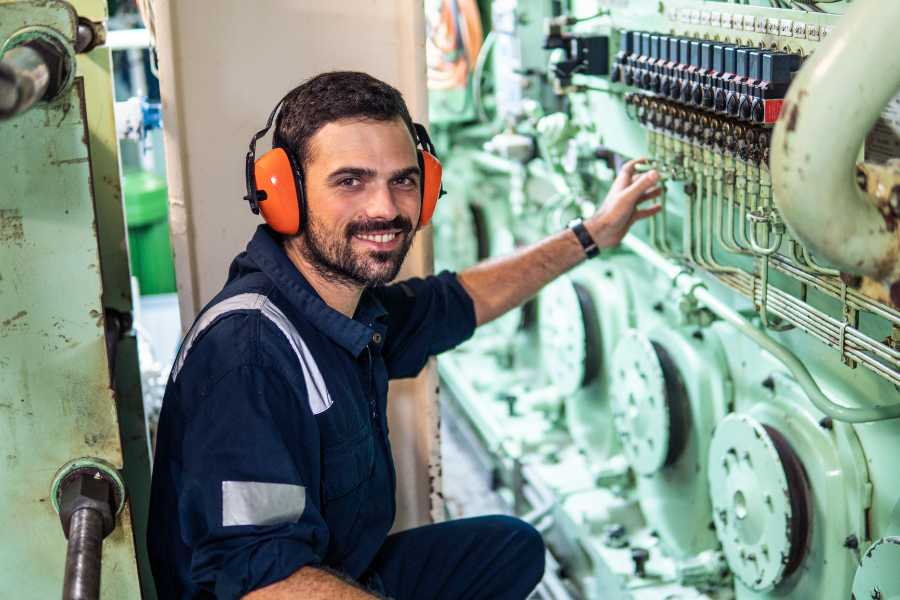
Marine Consultants

Marine consultants bring a depth of knowledge spanning engineering, operations, safety, environmental performance, and commercial strategy. Their role is to help vessel owners, operators and developers make informed decisions that reduce risk and improve efficiency.

Their expertise covers areas such as:

  • Vessel design and modification
  • Stability analysis and structural assessment
  • Regulatory compliance and certification
  • Environmental impact and sustainability planning
  • Operational optimisation and fuel efficiency
  • Risk management and safety protocols
  • Feasibility studies for new projects
  • Technical due diligence for acquisitions

In an industry where a single oversight can lead to costly delays or compliance issues, consultants provide clarity and direction. They help ensure that vessels and operations meet international standards while remaining commercially viable.

The Role of Naval Architects

Naval architects sit at the heart of vessel design and engineering. Their work shapes everything from hull form and propulsion to structural integrity and onboard systems. They combine creativity with technical precision, ensuring that vessels are safe, efficient and fit for purpose.

Key responsibilities include:

  • Concept and detailed vessel design
  • Hydrodynamic performance modelling
  • Structural calculations and finite element analysis
  • Stability assessments and load calculations
  • Integration of propulsion and power systems
  • Compliance with class rules and flag‑state requirements

Whether designing a new offshore support vessel or modifying an existing craft for new duties, naval architects ensure that every decision is grounded in engineering science and regulatory compliance.

Supporting Safety, Efficiency and Profitability

Marine Architect & Engineer

Marine consultants and naval architects play a direct role in improving operational performance. Their insights can lead to:

  • Reduced fuel consumption
  • Lower maintenance costs
  • Improved safety protocols
  • Enhanced crew comfort and efficiency
  • Longer vessel lifespan
  • Better environmental performance

They also help companies avoid costly mistakes. A poorly planned modification, an overlooked regulation or an inefficient hull design can have long‑term financial consequences. Consultants help identify risks early and propose solutions that protect both the vessel and the business.

Navigating Regulations and Industry Standards

The maritime sector is governed by a complex web of international laws, class rules and environmental regulations. Keeping up with these requirements is a challenge for any operator.

Marine consultants specialise in:

  • IMO compliance
  • Class society approvals
  • Flag‑state regulations
  • Emissions and environmental standards
  • Safety management systems
  • Documentation and certification

Their guidance ensures that vessels remain compliant throughout their lifecycle, avoiding delays, penalties or operational restrictions.

Driving Innovation and Sustainability

As the industry shifts towards greener technologies, consultants and naval architects are leading the way. They help operators explore:

  • Hybrid and electric propulsion
  • Alternative fuels
  • Energy‑efficient hull designs
  • Emissions‑reduction strategies
  • Lightweight materials and advanced composites

Their ability to blend innovation with practicality makes them invaluable partners in the transition to cleaner, more sustainable marine operations.

Why Sourcing the Right Expert Matters

Not all consultants are the same. Some specialise in offshore energy, others in commercial shipping, fishing vessels, workboats or leisure craft. Some focus on design, others on compliance, operations or environmental performance.

Choosing the right expert ensures:

  • Relevant experience
  • Sector‑specific knowledge
  • Faster problem‑solving
  • Better project outcomes
  • Reduced risk

This is where a curated directory becomes essential.

Using Seaplant to Find Marine Consultants and Naval Architects

Seaplant’s Marine Consultants directory provides a centralised resource for sourcing trusted professionals across the maritime sector. It allows users to explore specialists in:

  • Naval architecture
  • Marine engineering
  • Vessel design and modification
  • Offshore project consultancy
  • Environmental and regulatory compliance
  • Operational optimisation
  • Risk assessment and safety management

By browsing company profiles, operators can quickly identify consultants with the right expertise, track record and industry focus. This saves time, reduces uncertainty and ensures that projects are supported by qualified professionals.

Best Practice When Selecting a Marine Consultant

To get the most from your consultant, consider the following steps:

  • Define your needs clearly. Are you designing a new vessel, modifying an existing one, improving efficiency or addressing compliance issues?
  • Check relevant experience. Look for consultants who have worked on similar vessel types or project scopes.
  • Review qualifications and accreditations. Membership of professional bodies and class‑approved experience are strong indicators of quality.
  • Ask for case studies. Past projects reveal a consultant’s strengths and approach.
  • Assess communication style. Clear, proactive communication is essential for complex marine projects.

Consider long‑term support. Many consultants provide ongoing assistance, from design through to sea trials and operational optimisation.

Conclusion: Expertise That Shapes the Future of Marine Operations

Marine consultants and naval architects are more than technical advisors—they are strategic partners who help shape safer, more efficient and more sustainable marine operations. Their knowledge supports better decision‑making, reduces risk and drives innovation across the industry.

With the help of a trusted directory, sourcing the right expert becomes far easier.

Whether you’re planning a new build, upgrading an existing vessel or navigating regulatory challenges, the right consultant can make all the difference.

Add Your Company

Please contact us if you would like to add your company to our ever-growing offshore marine directory.


Liferafts International DiveCo Marine Civils Sealane Maritime Engineering
SubSalve USA Schwer Marine Fittings Hystat Hydraulic Cylinder Manufacturers BP Norse Marine Southbay Marine Services

APM 2026 Ends on High with Record Turnout

Wednesday, 1st April 2026

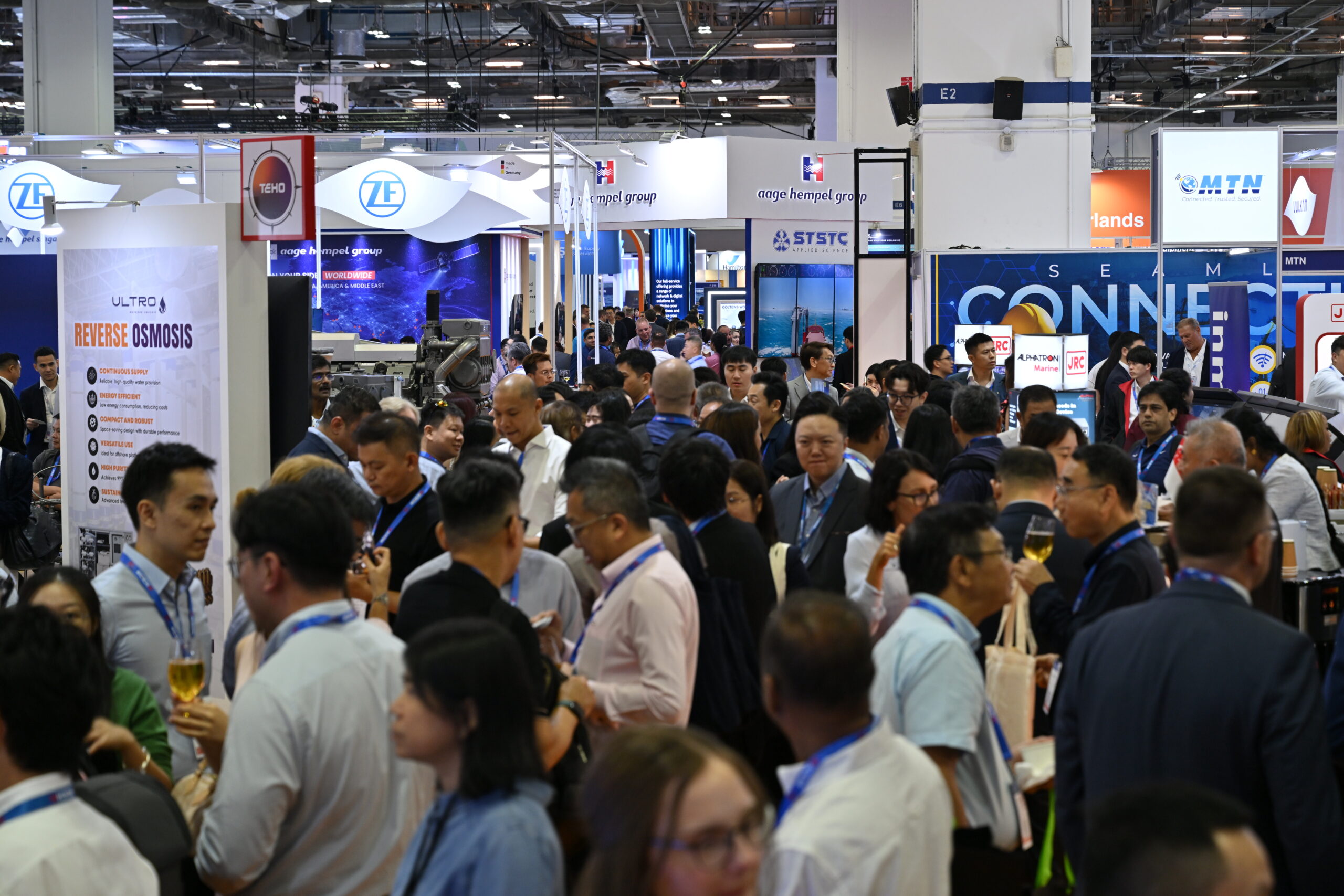
Asia Pacific Maritime (APM) 2026 has concluded its largest-ever edition in Singapore, marking a milestone event defined by record attendance, major industry announcements, and a strong focus on next energy and technological innovation.

Held from 25–27 March, the 19th edition of APM welcomed 19,431 attendees, alongside 819 exhibitors from 41 countries and regions, 20 national pavilions, and 112 global speakers. The event saw a surge in product launches, strategic partnerships, and industry collaborations, reinforcing confidence in Asia’s leading maritime exhibition and conference.

Yeow Hui Leng, Group Project Director of APM, said:
“The numerous deals and partnerships announced at the event underscore APM’s role beyond that of a maritime marketplace. It is a platform for showcasing best-in-class innovation and shaping solutions that will define the future of the industry. We thank our partners for their continued support in making APM the premier meeting point for global and regional maritime players.”
Strong regional engagement and industry collaboration

APM 2026 attracted key decision-makers from across Asia, including shipowners, shipyards, and solution providers. The Indonesian National Shipowners’ Association (INSA) led a delegation of 60 shipowners representing 20 shipping lines, highlighting the event’s importance as a regional hub for collaboration.

Carmelita Hartoto, Chairwoman of INSA, said:
“As a long-standing partner of APM, we value the opportunity to engage with global industry leaders, build partnerships, and exchange insights. The connections made here will help shape Indonesia’s maritime sector and drive innovation in vessel operations.”

Partnerships driving next energy solutions

A series of high-profile agreements and collaborations were announced during the event, many focused on advancing next-generation energy solutions and supporting the industry’s transition toward lower emissions.

Key developments included:

  • New industry partnerships led by VC Power, including collaborations with Bureau Veritas Marine Singapore and DNV Singapore to advance marine battery technology and training programmes
  • A partnership between Siemens Energy and Marco Polo Shipyard to develop hybrid-electric offshore wind support vessels
  • A joint agreement between Bureau Veritas, Beng Hui Marine Electrical, and Penguin International to deploy advanced power management and digital monitoring systems on new crewboats

Next energy takes centre stage

With ongoing uncertainty around global regulation and fuel availability, next energy solutions emerged as a central theme throughout the conference programme.

Industry leaders emphasised the importance of fuel flexibility and diversification, noting that while the pathway to net-zero remains clear, the pace and mix of adoption will vary.

Discussions covered a wide range of alternative fuels and technologies, including:

  • Ammonia as a marine fuel, with panellists highlighting progress in safety standards and successful ship-to-ship transfer trials
  • LNG and its evolving role, including bio-LNG and e-LNG as transitional decarbonisation pathways
  • Electrification in shipping, with growing adoption of lithium iron phosphate (LFP) batteries and exploration of future technologies such as small modular reactors

Across sessions, a consistent message emerged: while regulatory timelines may shift, the industry’s commitment to decarbonisation remains firmly in place.
Looking ahead to APM 2028

As the maritime sector continues to navigate energy transition, supply chain resilience, and evolving regulations, APM remains a key platform for driving dialogue and innovation.

The event will return for its 20th edition from 22–24 March 2028, with a continued focus on next-generation technologies and solutions shaping the future of the maritime industry.

For more information and event highlights, visit the official APM website or its LinkedIn and Facebook channels.

Associated Exhibition:
Liferafts International DiveCo Marine Civils Sealane Maritime Engineering
SubSalve USA Schwer Marine Fittings Hystat Hydraulic Cylinder Manufacturers BP Norse Marine Southbay Marine Services

Royal Navy Awards Teledyne AUV Services Contract

Tuesday, 31st March 2026

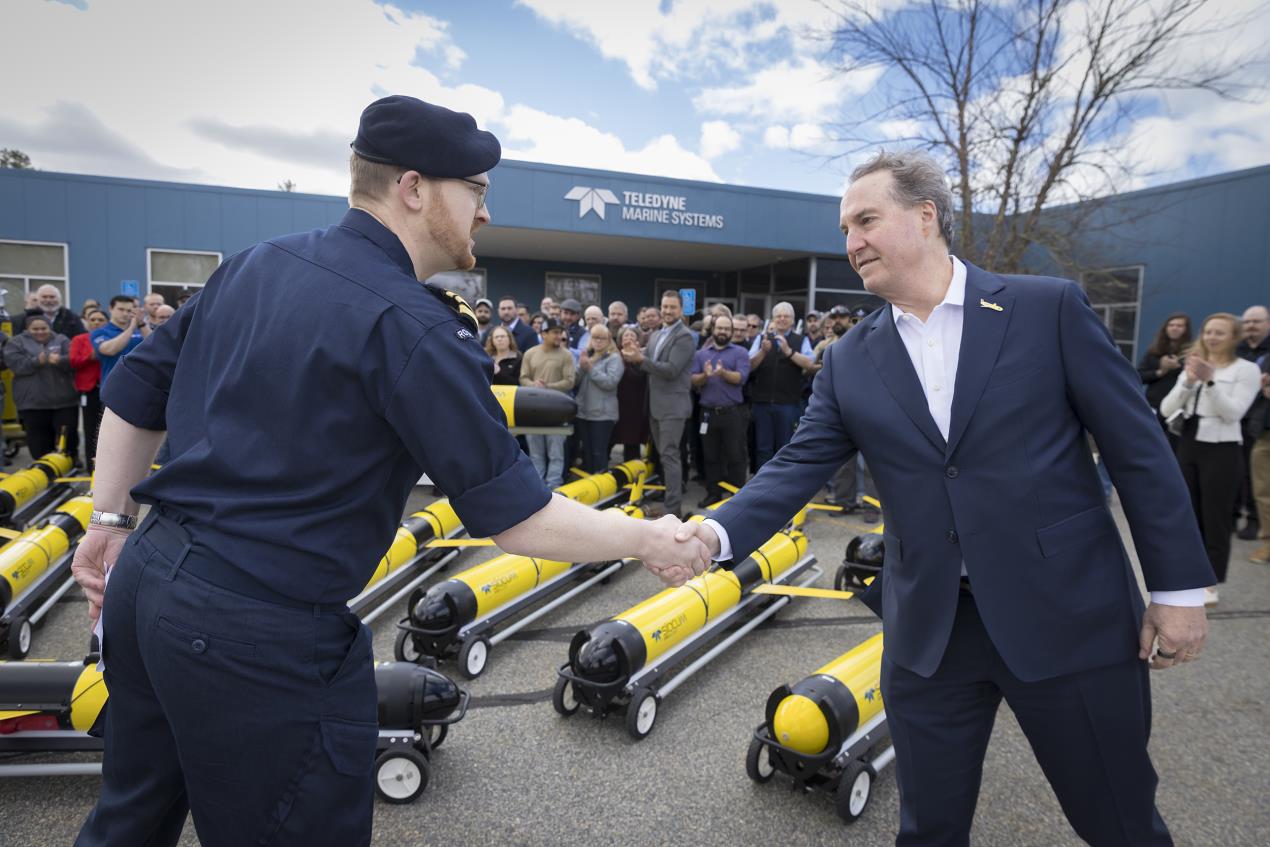
The UK Royal Navy has awarded Teledyne Marine a major contract to deliver advanced AUV services, autonomous underwater vehicle systems, and underwater drones, thereby strengthening its oceanographic data-gathering and maritime defence capabilities.

The agreement, awarded by the UK Ministry of Defence (MOD), supports the Royal Navy’s Future Maritime Data Gathering (FMDG) programme – Persistent Oceanographic Data Collection, a key initiative aimed at enhancing environmental intelligence and operational readiness.

Under the contract, Teledyne will supply a range of autonomous ocean observing systems, including Sentinel and Slocum gliders, APEX floats, and associated AUV services. These technologies will expand the Royal Navy’s use of Autonomous Underwater Vehicles (AUVs) and underwater drones to collect high-quality oceanographic data for operational planning, maritime safety, and defence activities, directly supporting Atlantic Bastion.

Teledyne’s systems are designed for long-endurance deployment in complex, remote environments, delivering reliable, actionable environmental data. The programme builds on the Royal Navy’s ongoing use of Teledyne Slocum gliders since 2015 and highlights the growing importance of AUVs (autonomous underwater vehicles) and underwater drones in modern NATO naval operations.

A Royal Navy direct award justification noted that Teledyne remains the only supplier capable of ensuring seamless interoperability, security compliance, and mission readiness within the existing fleet.

George Bobb, President and CEO of Teledyne, said:
“This award reflects the Royal Navy’s continued confidence in Teledyne’s autonomous underwater vehicle technology, underwater drones, and AUV services, as well as our strong partnership in delivering mission-ready solutions. We are proud to support the Future Maritime Data Gathering programme and provide critical capabilities that enable high-quality ocean data for defence and maritime operations.”

Commander Butcher, Royal Navy Capability Sponsor, added:
“This investment in autonomous ocean sensing strengthens the Royal Navy’s ability to understand and operate in an increasingly contested North Atlantic. Persistent data from systems such as these enhances our understanding of the underwater battlespace, enabling Tactical Exploitation of the Environment and delivering the operational advantage commanders require.”

Since 2015, Teledyne has supported the Royal Navy with a range of autonomous underwater vehicle systems, including Slocum gliders, APEX floats, and Gavia AUV platforms—often referred to as underwater drones—all engineered to perform reliably in demanding operational conditions. Today, Teledyne’s AUV services and unmanned technologies are widely used by naval, commercial, and scientific organisations worldwide.

Proven AUV Capability

Teledyne Marine is a global leader in AUV, autonomous underwater vehicle, and underwater drone technology. The company has delivered more than 12,000 APEX floats and over 1,290 Slocum gliders, with more than 600 systems currently in service with NATO naval users. Its Gavia Autonomous Underwater Vehicle platforms—commonly described as advanced underwater drones—are deployed by 18 navies worldwide, reinforcing Teledyne’s position at the forefront of AUV services and innovation.

Strong UK Presence

Teledyne employs approximately 2,700 people across 18 sites in the UK, supporting national defence priorities through advanced AUV systems, underwater drones, local expertise, and long-term partnerships.

Associated Listing:
Liferafts International DiveCo Marine Civils Sealane Maritime Engineering
SubSalve USA Schwer Marine Fittings Hystat Hydraulic Cylinder Manufacturers BP Norse Marine Southbay Marine Services

33m Supa-SWATH Crew Transport Vessel Launched

Wednesday, 18th March 2026

Walker Marine Design and Mainprize Offshore Launch Next-Generation 33m Supa-SWATH Crew Transport Vessel

Walker Marine Design and Mainprize Offshore have announced the launch of their latest crew transport vessel (CTV) innovation: a next-generation 33-metre Supa-SWATH design engineered for superior offshore performance.

Building on a proven platform first developed in 2015 and validated through extensive testing at the Haslar Ocean Basin, the Supa-SWATH hull form has established itself as a leader in the global crew transfer vessel market. With multiple 26-metre vessels already in operation and additional units under construction at Strategic Marine, the design continues to evolve through ongoing research and development.

The new 33m Supa-SWATH crew transport vessel represents the second-generation iteration of this platform, incorporating refined hull lines to reduce resistance while maintaining exceptional seakeeping performance. The result is a highly efficient CTV capable of safe, reliable personnel transfer in challenging offshore conditions.

Designed with offshore wind and energy sector demands in mind, the vessel delivers significantly enhanced onboard capacity and comfort. It accommodates up to 36 industrial personnel in premium seating, alongside six cabins, a dedicated crew mess, and a purpose-built changing room—ensuring optimal welfare for both passengers and crew during extended operations.

With an overall length of 33 metres and a beam of 13 metres, the vessel also offers substantial increases in fuel, water, and cargo capacity. This enables extended range and operational flexibility, making it a versatile solution for modern offshore logistics and crew transfer requirements.

James Walker, Principal Naval Architect at Walker Marine Design, said:
“The Supa-SWATH crew transport vessel has evolved significantly since the first vessel entered service in 2018. With 14 vessels delivered and more than £3 million invested in research and development, this larger 33-metre design expands operational capability and sets a new benchmark for CTV performance.”

Bob Mainprize, Managing Director at Mainprize Offshore, added:
“This 33m crew transport vessel complements our existing fleet by offering a true multi-role offshore platform. Clients benefit from enhanced seakeeping, improved transfer efficiency, increased cargo capacity, and upgraded onboard facilities. Each vessel can also be customised to meet specific operational requirements, from layout to storage and cargo handling.”

Key Specifications

  • Length: 33 metres

  • Beam: 13 metres

  • Fuel Oil Capacity: 63,800 litres

  • Fresh Water Capacity: 20,100 litres

  • Deck Cargo Capacity: 50 tonnes

  • Main Engines: 2 × Caterpillar C32B

  • Propulsion: 2 × 4-blade CPP

  • Maximum Speed: 30 knots

The first two vessels in this new 33m Supa-SWATH crew transport vessel class are currently under construction, with delivery scheduled for 2027.

Associated Listing:
Liferafts International DiveCo Marine Civils Sealane Maritime Engineering
SubSalve USA Schwer Marine Fittings Hystat Hydraulic Cylinder Manufacturers BP Norse Marine Southbay Marine Services

Rotec Hydraulics Achieves ISO 45001 Certification

Tuesday, 17th March 2026

Rotec Hydraulics Ltd, a leading provider of hydraulic, pneumatic, and electrical engineering solutions, is proud to announce it has officially achieved the ISO 45001 certification for Occupational Health and Safety Management.

This globally recognised accreditation completes a ‘trio’ of ISO International Standards for Rotec, following ISO 9001 (Quality Management) and ISO 14001 (Environmental Management). The achievement follows a rigorous independent audit process, demonstrating Rotec’s unwavering commitment to the highest global benchmarks for safety, quality, and sustainability.

Achieving ISO 45001 comes during a period of significant compliance success for Rotec, following the recent successful renewals of its JOSCAR and SafeContractor status. Together, these certifications provide a robust framework for Rotec’s operations across all industry sectors, including marine, aerospace, defence, and manufacturing.

Paul Prouse, Managing Director of Rotec Hydraulics, commented:

“Achieving ISO 45001, alongside our existing ISO 9001 and 14001 certifications, reflects our team’s commitment to hard work, high standards, and operational excellence.

Rotec Hydraulics Ltd: Precision Hydraulic Engineering from a Trusted UK Specialist

Rotec Hydraulics Ltd is one of the UK’s leading providers of hydraulic, pneumatic and electronic control solutions, serving industries where reliability and precision are absolutely essential. Based in the South West of England, the company has built a strong reputation for delivering high‑quality engineering services to marine, offshore, defence, manufacturing, agriculture and transport sectors. Their expertise spans everything from bespoke hydraulic system design to on‑site repair, testing and maintenance, making Rotec a trusted partner for organisations that depend on robust, high‑performance equipment.

One of Rotec’s core strengths is its ability to offer complete hydraulic solutions under one roof. Their team designs, manufactures, and installs custom hydraulic systems tailored to each client’s needs. This includes power units, control systems, cylinders, hoses and complex assemblies built to withstand demanding operational environments. For marine and offshore customers, Rotec’s systems are engineered to withstand corrosion, vibration, heavy loads, and continuous use, ensuring long‑term reliability.

Rotec is also known for its responsive service and repair capabilities. Their engineers provide on‑site diagnostics, fault‑finding and emergency breakdown support, helping operators minimise downtime and keep critical equipment running. The company’s workshops are equipped for cylinder refurbishment, hose assembly, component testing, and full-system overhauls. This combination of mobile support and in‑house engineering gives clients confidence that Rotec can resolve issues quickly and effectively.

In addition to hydraulics, Rotec supplies a wide range of pneumatic and electronic control products, offering integrated solutions that improve efficiency and performance. Their partnerships with leading global manufacturers ensure access to high‑quality components backed by expert technical advice.


Associated Listing:
Liferafts International DiveCo Marine Civils Sealane Maritime Engineering
Seaplant Marine & Offshore Magazine

Join us

Our commercial marine magazine is designed to provide the perfect place for buyers and sellers of marine equipment and services to find each other.  Provide us with your name and address to receive your copy every month and upload your details to our website to be part of the Seaplant marine Business Finder.

add your company