SubSalve USA Schwer Marine Fittings Hystat Hydraulic Cylinder Manufacturers BP Norse Marine Southbay Marine Services

DLM Expands Machine Shop

Thursday, 8th May 2025

Dynamic Load Monitoring (UK) Ltd. (DLM) has expanded its machine shop in Vancouver Wharf, Southampton and increased staff numbers, to meet demand for load pins.

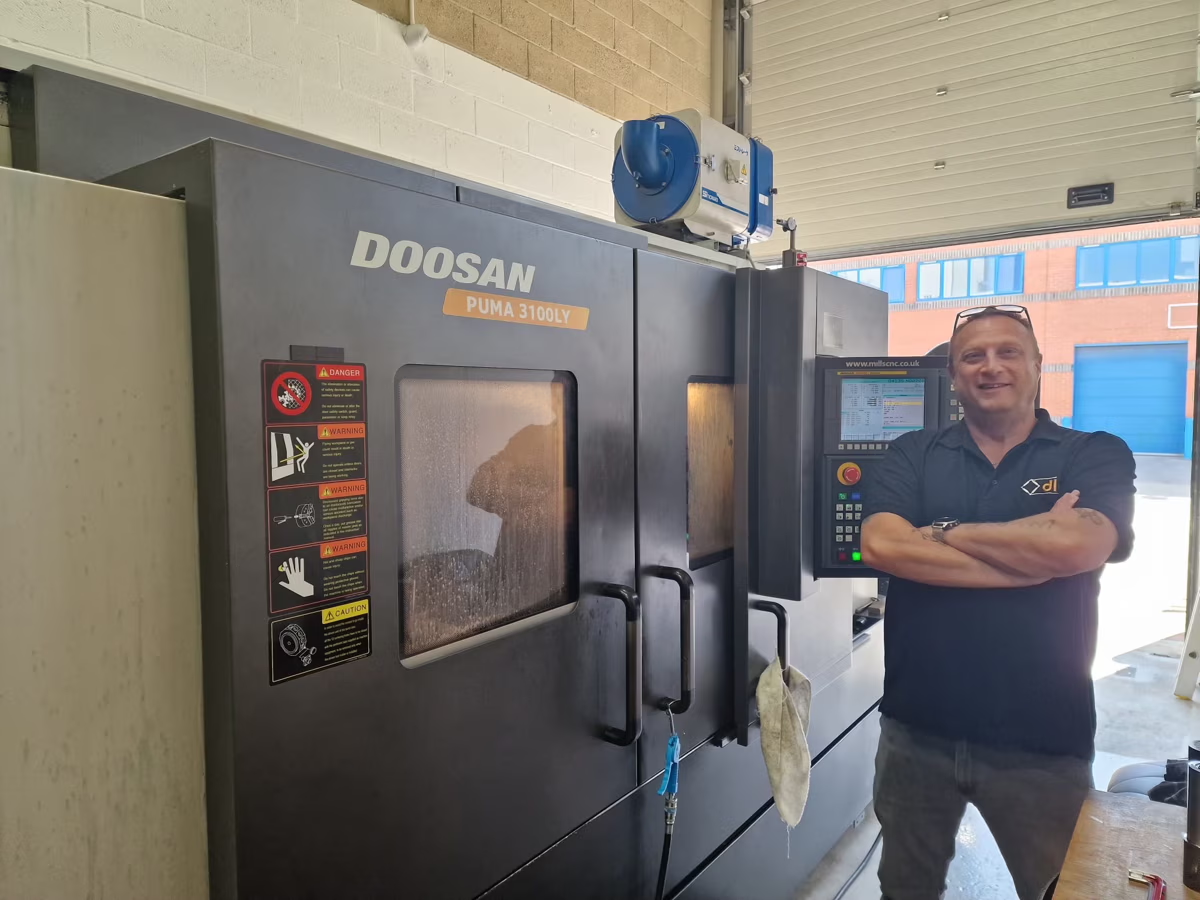
A state-of-the-art suite of machining and milling equipment already gave DLM full control of its manufacturing processes, reducing lead times, but a newly installed Doosan Puma 3100LY computer numerical control (CNC) lathe will further boost capacity. It joins an existing lathe and a mill, in addition to a band saw and other CNC equipment shared with a sister business. DLM now employs three machinists, two operating lathes and another working with the mill. A technical manager and technical director oversee operations.

DLM has supplied load cells plus load monitoring and cable working equipment to the lifting, rigging, wind energy, and wider renewables sector for a decade. Previously, DLM would source the raw material — typically 17-4PH stainless steel — and outsource to a machinist that would machine the load cell billet according to drawings produced by the in-house design team. DLM would then complete strain gauging, assembly, proof load testing, and calibration.

Martin Halford, managing director at DLM, said: “A lot has happened in the year since we moved into the new [machine] shop. We had planned future expansion to gain more capacity and to be able to increase the size of the load pins we can manufacture, but the opportunity came up to purchase this machine ahead of time. We have seen an upturn in the number of custom load pins we have been manufacturing and expanded CNC capacity will empower us even further.”

DLM’s load pins are typically custom designed to meet clients’ specific physical size requirements. The new lathe enables DLM to machine larger pins, both in length and diameter; the product also has a Y-axis, enabling the machining of more detail, which wasn’t possible with the other lathe. The addition effectively doubles machining capacity.

Halford added: “While our [load] pin orders come from a myriad of sectors, we are seeing an ongoing uptick in demand from offshore industries. Speed is critical when dealing with the offshore market, as increased time often means huge increases in costs when a ship is not able to operate. Larger capacity gives us more scope to better handle bigger batches in-house and gives us full control over our supply chain as we approach the point where we are a fully vertically integrated operation.”

The machine shop expansion chimes with the company joining the Joint Supply Chain Accreditation Register (JOSCAR), which means it is approved to work on aerospace, defence, and security contracts, such as those overseen by the UK’s Ministry of Defence (MOD) and its supply chain partners. It is also a member of Make UK Defence, which champions the UK’s innovative and diverse defence and security manufacturers, along with the world-class supply chain that underpins them.

DLM’s Halford also confirmed plans for investment in testing capability at its calibration workshop.

Associated Listing:
Liferafts International DiveCo Marine Civils Sealane Maritime Engineering
SubSalve USA Schwer Marine Fittings Hystat Hydraulic Cylinder Manufacturers BP Norse Marine Southbay Marine Services

LGH & Rotrex unifies with appointment of director Don Wilkinson

Wednesday, 23rd April 2025

LGH & Rotrex unifies with the appointment of Group Sales Director, Don Wilkinson

LGH & Rotrex Europe is thrilled to announce a significant step forward in our journey to enhance collaboration and drive growth across our Group. Don Wilkinson, a seasoned leader with a proven track record at Rotrex Europe, has recently been appointed Group Sales Director, overseeing the sales functions for both Rotrex and LGH (Lifting Gear Hire) across Europe.

This strategic move reflects our commitment to facilitating a more unified approach, leveraging the strengths of both companies to capitalise on exciting growth opportunities. Don’s extensive experience and deep understanding of our operations make him the perfect fit to lead our sales strategy into the future.

A Proven Leader Steps Up

Don’s journey with us began in September 2016, and he has consistently demonstrated exceptional leadership and a keen understanding of the market. He’s held key positions at Rotrex, including Operations Manager and General Manager, before taking on the role of Sales Director in 2023. Under his guidance, Rotrex Europe, a leading winch specialist offering 360-degree winch services encompassing hire, sales, servicing, and testing, has seen significant growth.

Now, he will bring his expertise to LGH, the world’s largest organisation exclusively devoted to the hire of lifting equipment. This unified approach will allow us to streamline our sales efforts, enhance customer service, and unlock new avenues for growth.

What This Means for Our Customers

This appointment signifies our dedication to providing even greater value to our customers. By aligning our sales strategies across Rotrex and LGH, we can offer a more comprehensive and integrated service experience.

This change reflects the strong collaboration between the two businesses over the years, forming one cohesive group while each retains their expert teams, including shared warehouses and service offerings.

“Don’s leadership and clear vision will be invaluable in driving our sales strategy across the Group as he looks to capitalise on growth opportunities,” said Andy Mault, CEO.

Don Wilkinson himself is enthusiastic about his new role and the opportunities it presents.

We are confident that Don’s leadership will drive our sales teams to new heights and strengthen our position as industry leaders.

Associated Listing:
Liferafts International DiveCo Marine Civils Sealane Maritime Engineering
SubSalve USA Schwer Marine Fittings Hystat Hydraulic Cylinder Manufacturers BP Norse Marine Southbay Marine Services

TMS Maritime awarded contract for construction of new quay wall

Wednesday, 16th April 2025

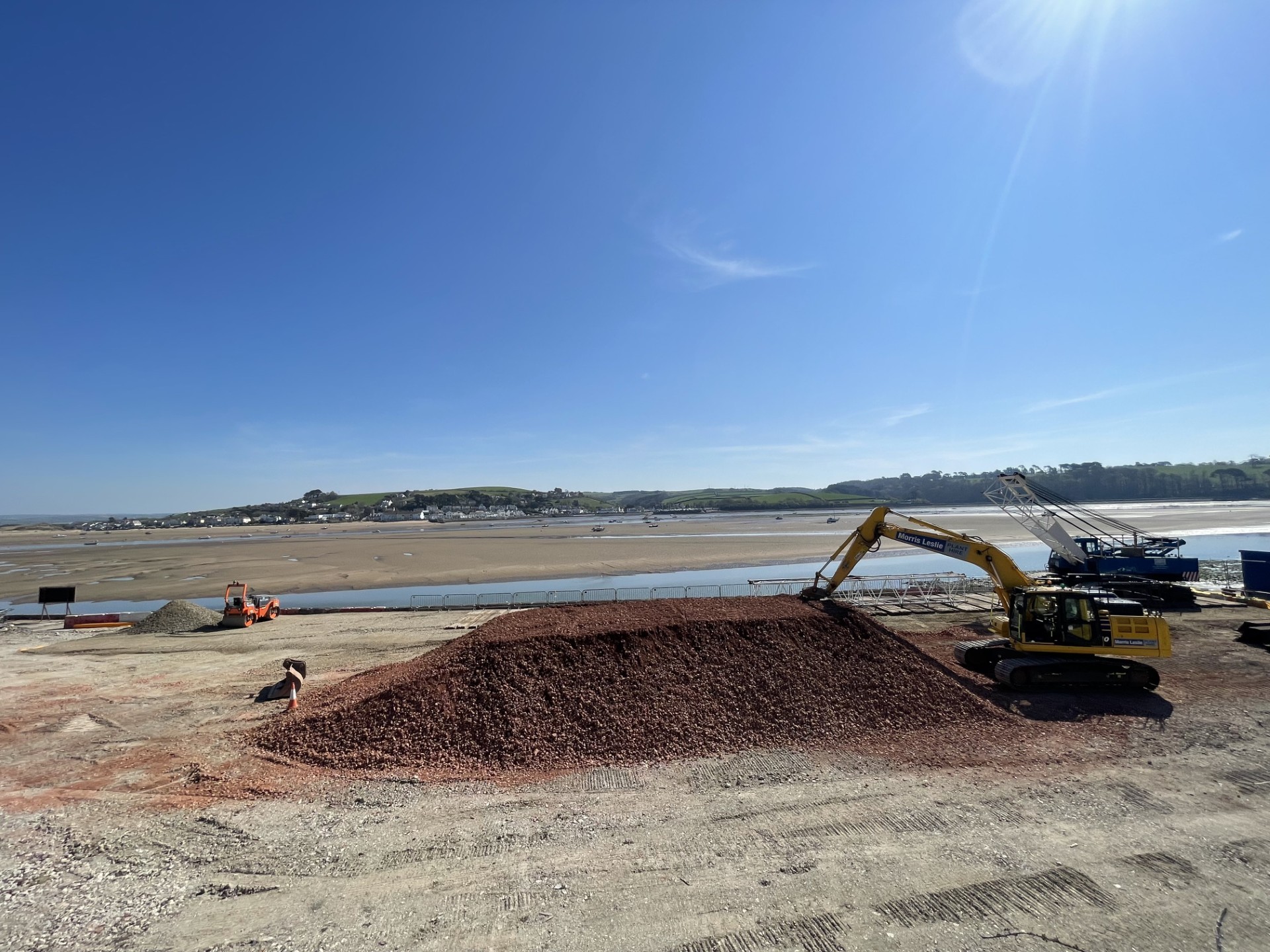
TMS Maritime are delighted to announce that we have been awarded the contract for the construction of the new quay wall as part of the Appledore Clean Maritime Innovation Centre project.

This prestigious development represents a significant investment in the future of sustainable marine technologies, aiming to position Appledore as a hub for research, development, and innovation in the clean maritime sector.

Our scope of works includes the installation of a new quay wall structure to facilitate improved marine access, provide berthing for vessels supporting clean maritime research, and ensure the long-term resilience of the dock infrastructure. The project will involve a combination of mobilisation, piling operations and marine plant operations, all conducted in a live port environment with careful coordination with local stakeholders.

TMS Maritime will be deploying a full marine team, with the IHI 80T Crawler Crane and supporting equipment already mobilising to site. Early works are now underway, including the construction of the crane mat and preparation for the construction of the JUB.

About TMS Maritime

TMS Maritime: Specialists in Marine and Civil Engineering Solutions

TMS Maritime is a highly respected UK-based marine and civil engineering contractor with over 30 years of experience delivering complex, high-quality projects across the UK’s coastal and inland waterways. Based in Devon, the company is recognised for its specialist expertise in marine construction, maintenance, and infrastructure works, supporting clients from both the public and private sectors.

Extensive Experience and Specialist Services

TMS Maritime offers a comprehensive range of marine and civil engineering services, including the construction and maintenance of jetties, piers, pontoons, quays, slipways, breakwaters, revetments, lock gates, and sea defences. Their services are delivered by an experienced in-house team that includes skilled engineers, project managers, and operatives trained to work in challenging marine environments.

Their reputation has been built on their ability to deliver technically demanding projects on time, on budget, and to the highest safety and quality standards. TMS Maritime is also adept at operating within environmentally sensitive locations and complying with strict environmental regulations, making them a trusted partner for sustainable infrastructure development.

Key Areas of Operation

TMS Maritime operates throughout the UK, undertaking projects in harbours, ports, rivers, estuaries, and coastal locations. Their core areas of expertise include:

  • Marine Construction – including quay walls, jetties, and floating pontoons.

  • Coastal and Flood Defence – working on vital infrastructure to protect communities from erosion and flooding.

  • Inland Waterways – lock gates, bridges, and towpath improvements for canals and rivers.

  • Maintenance and Refurbishment – repair and maintenance of marine and civil assets.

TMS Maritime has a fleet of specialist marine plant and equipment, including modular pontoons, floating plant, cranes, and barges, which allows them to deliver projects efficiently and safely in locations with limited access or tidal constraints.

Safety and Environmental Responsibility

Health, safety, and environmental sustainability are core values at TMS Maritime. The company is committed to achieving excellence in workplace safety and minimising environmental impact. They hold multiple accreditations, including ISO 9001 for quality management, ISO 14001 for environmental management, and ISO 45001 for occupational health and safety.

By adopting sustainable practices and innovative engineering solutions, TMS ensures their projects meet modern environmental expectations while supporting long-term coastal and infrastructure resilience.

Trusted by Public and Private Sectors

TMS Maritime works with a wide range of clients including the Environment Agency, Canal & River Trust, local authorities, port operators, private developers, and infrastructure owners. Their proven track record in delivering bespoke solutions for marine and civil projects has earned them long-standing relationships and repeat business across the UK.

Associated Listing:
Liferafts International DiveCo Marine Civils Sealane Maritime Engineering
SubSalve USA Schwer Marine Fittings Hystat Hydraulic Cylinder Manufacturers BP Norse Marine Southbay Marine Services

MMS Ship Repair completes addition of Woodwards Propellers

Monday, 14th April 2025

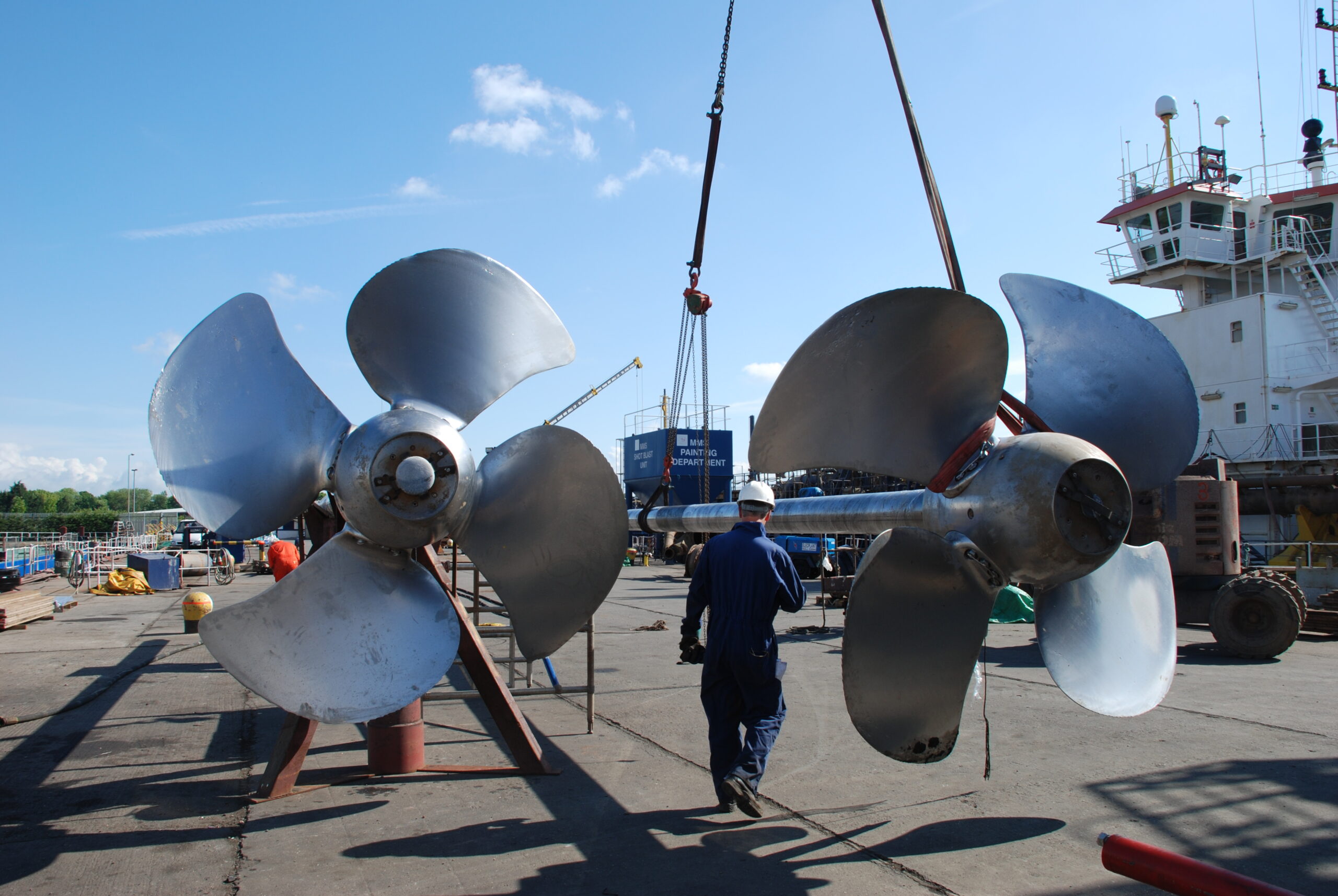
In November 2024 MMS Ship Repair and Dry Dock Co Ltd acquired the assets of A. & E. Woodward (Hull) Ltd, the marine specialists in propellers, associated shafts and stern gear. The company is now trading as MMS t/as Woodwards Propellers.

We have now completed the move of all their CNC & manually driven machining equipment, including a Butler internal/external slotting machine, a milling machine and a Leblonde lathe, along with their stock material comprising mill-certified Bronze, Stainless, and Mild Steel. Woodwards Propellers now have 2 purpose-built workshops serviced by a 5-tonne overhead crane, a secure propeller storage compound, along with a new office at Alexandra Dock, Hull, UK.

The most important assets that MMS have acquired are the truly unique team of engineers who have learned their skills at one of the UK’s longest established propulsion companies originally founded in 1908.

Maria Dunn continues at the helm and has helped to steer Woodwards Propellers through uncertain times and choppy waters to calm seas and a secure future, now having the support of MMS.

MMS Ship Repair and Dry Dock Co Ltd was established in 1988 and have built an excellent reputation, having carried out over 1,200 dry dockings, over 10,000 separate repair and conversion contracts and built in house over 20 different types of workboats. MMS takes great pride in the quality of their work and really do care for their customers, which is something of a rarity today.

The addition of Woodwards Propellers to MMS Ship Repair & Dry Dock Co Ltd truly enhances MMS as a ‘ONE STOP SHOP’ being able to offer in house propeller repairs and refurbishments, reducing both costs and time for ship and boat owners of any size vessels.

We look forward to seeing customers old and new and assure them of our best attention at all times, offering high quality work with a fast turnaround at competitive prices.

Liferafts International DiveCo Marine Civils Sealane Maritime Engineering
SubSalve USA Schwer Marine Fittings Hystat Hydraulic Cylinder Manufacturers BP Norse Marine Southbay Marine Services

World’s Smallest Fully Integrated Autonomous Navigation Solution

Wednesday, 9th April 2025

Teledyne Marine unveils the latest in navigation equipment …the Teledyne Compact Navigator, a ground-breaking, ultra-compact and advanced autonomous integrated navigation solution that redefines performance in a small form-factor, at Ocean Business 2025.

Extreme optimisation on size, weight, power, performance, and functionality makes the new Compact Navigator revolutionary. Ideal for small vehicles, it enables inspection and survey applications not previously achievable. Designed for both subsea and surface vehicles, the Compact Navigator sets a new standard for precision navigation in a remarkably small footprint.

Available in two depth-rated versions—4000m and 300m—the Compact Navigator has been developed using unique Teledyne Marine technology by their world-leading navigation experts and in consultation with key ROV and AUV companies.

Key Advantages of Autonomous Navigation

– World’s Smallest High-Accuracy Navigator – Measures only Ø114mm x 135mm, fitting within the volume of most standalone DVLs, while still outperforming much larger navigation systems

– Ultra-Low Power Consumption – Uses less than 7 watts, a breakthrough in energy efficiency. Allowing missions to last longer and extending the time before a vehicle needs to surface.

– Seamless Integration – A single lightweight unit with minimal cabling simplifies installation, reduces costs, and frees up valuable space on compact vehicles.

The Compact Navigator’s fully autonomous operation eliminates the need for external aiding or operator intervention, ensuring ease of use. It also features comprehensive connectivity, with power, Ethernet, dual triggers, and serial connections accessible via a single connector. The advanced phased array DVL technology enhances performance while maintaining its compact size, allowing the instrument to sit flus with an AUV or ship hull. Designed for versatility, the Compact Navigator supports a wide range of applications, from ROVs and AUVs to shallow water surface navigation, GNSS-denied environments, and dynamic positioning for surface vehicles.

The Compact Navigator combines true North-seeking gyrocompass-grade performance with a rich WebUI for integration, operation, and troubleshooting. With a factory-calibrated design and battery backup option, it ensures high reliability in demanding environments.

Unlike traditional surface navigation systems, the Compact Navigator operates independently of GNSS, making it resistant to jamming or signal loss. This breakthrough is particularly crucial for shallow water navigation, where traditional GNSS-dependent systems can fall short.
As autonomous surface vehicles become more prevalent, a robust and independent navigation solution like the Compact Navigator becomes increasingly vital.

“The Compact Navigator represents a significant leap forward in navigation equipment,” said Rolf Christensen, Head of Product Management at Teledyne Marine. “It’s ultra-compact design, high-accuracy, premium titanium construction, and ability to operate in challenging acoustic environments make it the new ‘go-to’ choice for operators requiring reliable, high-performance navigation in both subsea and surface applications.”

Manufactured and supported in both the US and EU, the Compact Navigator is ITAR-free, ensuring easy export, worldwide availability and local technical support.


Associated Listing:
Associated Exhibition:
Liferafts International DiveCo Marine Civils Sealane Maritime Engineering
SubSalve USA Schwer Marine Fittings Hystat Hydraulic Cylinder Manufacturers BP Norse Marine Southbay Marine Services

Checkmate Flexible Engineering sets new industry benchmark

Wednesday, 2nd April 2025

Checkmate Flexible Engineering continues to set new industry benchmarks, with over 250,000 dunnage bag units sold worldwide, as well as 600 manifold units in use on forest product vessels worldwide. This achievement reflects not only the growing demand for our cargo protection but also our commitment to continuous innovation.

Following in the footsteps of the award-winning Corner Fill Dunnage Bag introduced in 2013, our latest advancements continue to push boundaries. Just as the Corner Fill dunnage Bag revolutionised dunnage bag design with its enhanced valve system, our latest manifold technology ensures even greater stability and efficiency for modern cargo shipments.

Our dunnage bags are engineered for strength and reliability with our Air Pressure Maintenance System, ensuring optimal performance. As we continue to grow, our focus remains on delivering cutting-edge solutions that redefine cargo protection.

About Checkmate Flexible Engineering

Checkmate Flexible Engineering (CFE) is a UK-based specialist in the design, development, and manufacture of advanced rubber and flexible structures. With headquarters in Melksham, Wiltshire, CFE has built a strong reputation across the marine, defence, aviation, and industrial sectors for delivering precision-engineered elastomeric products tailored to demanding environments.

Innovative Engineering and Manufacturing

At the heart of CFE’s operations is its expertise in fabricating high-performance rubber components and systems. The company’s capabilities include compression moulding, custom rubber seals, inflatable structures, and complex elastomeric assemblies. These solutions are engineered to meet exacting standards, ensuring durability, flexibility, and reliability in challenging conditions.

CFE’s in-house team of engineers and technicians work closely with clients to provide bespoke marine solutions, from initial concept and design through to prototyping and full-scale production. This collaborative approach ensures that each product is optimised for its specific application, whether it’s a hovercraft skirt, a peristaltic hose, or a submarine gaiter.

Diverse Industry Applications

CFE serves a wide range of industries, offering products and services that are critical to the performance and safety of various operations:

  • Marine: Specialised products, such as hawse seals, inflatable hatch seals, marine fenders, and undersea habitat seals, are designed to withstand the harsh marine environment.

  • Defence and Aviation: CFE provides air landing bag cushions, inflatable intake covers, rocket motor forming bags, and submarine gaiters, supporting critical defence applications.

  • Industrial: Products like peristaltic hoses, tyre building bags, and tube press pressure bags cater to various industrial processes, ensuring efficiency and reliability.

  • Cargo Protection: The company offers a range of dunnage bags, including heavy-duty and multi-chamber options, to secure cargo during transportation.

Commitment to Sustainability and Quality

CFE is dedicated to sustainable practices, offering repair and recycling services for products like dunnage bags, thereby extending their lifecycle and reducing environmental impact. The company’s commitment to quality is reflected in its adherence to industry standards and continuous investment in research and development.

A Trusted Partner in Engineering Excellence

With a focus on innovation, quality, and customer collaboration, Checkmate Flexible Engineering continues to be a trusted partner for organisations seeking advanced elastomeric solutions. Their ability to deliver customised, high-performance products makes them a valuable asset across multiple sectors.

Associated Listing:
Liferafts International DiveCo Marine Civils Sealane Maritime Engineering
SubSalve USA Schwer Marine Fittings Hystat Hydraulic Cylinder Manufacturers BP Norse Marine Southbay Marine Services

Castoldi Turbodrive Waterjet successfully fitted to Patrol Vessels

Tuesday, 1st April 2025

Castoldi S.r.l., a global leader in waterjet propulsion systems has announced recent successful sea trials for two important patrol vessels, both equipped with dual installations of the latest Castoldi Turbodrive 400 HCT waterjets.

Castoldi ACES control system.

As well as the first references for the 400 HCT, the latest model in Castoldi’s hydrodynamically optimised waterjet range, the two new vessels, one for the Italian Coastguard, the other for fisheries patrol duties in the North Sea, Germany also showcase the latest version of the state of the art Castoldi ACES control system.

Exceeding the design brief

The new 16 metre patrol vessel for the Italian Coastguard recently exceeded its design brief in an unusual early sea trial, said Giacomo Castoldi, owner at Castoldi S.r.l. “This new generation, high performance boat, christened CP335 and designed and constructed in Italy by FB Design, began its life with a demanding cruise from Venice to Puglia in winter sea conditions. The crew recorded speeds up to 38 knots, which is higher than the maximum forecast by the designers, underscoring the efficiency of the Turbodrive 400 HCT”.

Ebe Buzzi, Commercial Director at FB design added: “With a tight delivery timing and a demanding customer, Castoldi provided the best solution on the market. After many years of using only our own propulsion system, we were surprised both by the ease of installation and by the performance. Castoldi allowed us to build a fast, reliable, efficient boat, that was also incredibly easy to manoeuvre and perfectly suited the client’s needs.

New Range of High Technology Waterjets

Obtaining its name from its 400mm jet housing, integrated gearbox/hydraulic clutch and high thrust efficiency, the Turbodrive 400 HCT is the latest size in a new range of high technology waterjets that have been designed using the latest and most advanced Computational Fluid Dynamics (CFD) software, making them up to12% more efficient than previous waterjets.

It is a great source of pride for Giacomo Castoldi to supply the propulsion for CP335, which is the first of a new design for the coastguard and could perform the basis for a new class of vessels: “CP335 is an important vessel which has worked out to be something of a showcase of Italian engineering prowess. The Castoldi Turbodrive 400 HCT waterjets with their ACES control system can deliver boathandling and seamanship miracles, and the whole package is wrapped up in the distinctive lines provided by FB Design. It’s wonderful to provide our technological expertise and proven reliability to back up the performance of this Italian-built boat that stands to protect our waters for many years to come”.

Recently completed at Tamsen Maritim, the historic shipyard at Rostock, on Germany’s Northern coast, the new 17 metre fisheries patrol vessel provides another solid example of a demanding vessel use profile for the Castoldi Turbodrive 400 HCT waterjets. The vessel is set to patrol the cold waters of the Baltic year in and year out; a stretch of water where vessel reliability is critical.

Castoldi  Turbodrive Waterjet

Castoldi waterjets have always been a popular choice amongst heavy commercial users, in part because they all feature a durable integrated gearbox (heavy duty certified) and multi-disc hydraulic clutch allowing the drive to be engaged and disengaged without stopping the engine. They can also be equipped with the Clear-Duct advanced cleaning system that, when activated, performs the dual action of impeller reversing (back-flushing) and intake screen grid opening, reducing time off service for hard-working commercial vessels.

Castoldi ACES

Both vessels rely upon the Castoldi ACES control system for accurate station keeping in port and at sea. ACES is a totally integrated Electronic Control System based on a 32-bit embedded processor using a dedicated CAN bus network protocol. Designed in partnership with Xenta, a specialist in integrated control systems, ACES is suitable for single or multiple installations of Castoldi waterjet units. It provides control of engine rpm, waterjet steering nozzles and reversing buckets in docking, cruising and dynamic positioning mode operations.  Additionally, ACES is available with a proven interface for USV applications, and Turbodrive 400 HCT will soon be installed on such a vessel.

Castoldi ACES is not a ‘one size fits all’ solution, and in both these builds it has been extensively configured to serve the hull and power characteristics of two very different vessels, adds Chiara Colombo, Marketing and Communications Manager at Xenta: “Xenta continuously improves the algorithms related with the powertrains control systems, focusing specifically on manoeuvring and dynamic positioning systems. 20 years ago, Xenta began developing a method (that is part of a registered patent) that allows its algorithm to seamlessly adapt to any type of boat, regardless of differences between vessels. Rather than aiming to define the dynamics of a ‘perfect’ boat, our approach prioritizes replicating the intuitive decisions of an experienced captain in various situations. During the commissioning phases, our engineers enable the system to learn and optimize its handling for each specific boat.”

With over 60 years of expertise in manufacturing waterjet propulsion systems, Castoldi is committed to pushing the boundaries of innovation. The Turbodrive 400 HCT represents a significant milestone in the evolution of waterjet propulsion, catering to the demands of a new era that seeks ever higher performance, efficiency and control without burning more fuel to achieve it.

For more information about the Turbodrive 400HCT, the ACES system and other Castoldi products, please visit www.castoldijet.it


Associated Listing:
Liferafts International DiveCo Marine Civils Sealane Maritime Engineering
SubSalve USA Schwer Marine Fittings Hystat Hydraulic Cylinder Manufacturers BP Norse Marine Southbay Marine Services

LEEA Invites Industry to Take Survey Ahead of GLAD

Thursday, 27th March 2025

The Lifting Equipment Engineers Association (LEEA) is inviting members and non-members to help build the future of the industry by taking a survey, ahead of Global Lifting Awareness Day’s (GLAD) return on Thursday 12th June 2025. The survey closes on 25th April 2025.

This year, GLAD is upheld by the theme, “Lifting Careers, Building Futures,” and is dedicated to tackling the growing skills shortages across the lifting industry, promoting practical tools to attract new talent. The day is a launchpad to inspire the next generation to explore careers in lifting.

The lifting industry plays a crucial role in global infrastructure, construction, manufacturing, logistics, and more, yet many employers are struggling to recruit and retain skilled professionals. As recruitment challenges intensify, GLAD 2025 aims to provide practical solutions to help businesses identify, develop, and retain top talent.

As part of LEEA’s commitment to drive positive change in the lifting industry, it is conducting an international survey to understand skills gaps, recruitment challenges, and training needs. Insights will help shape how it supports a skilled, safe, and sustainable workforce.

The findings will be a key feature of GLAD 2025, driving thought leadership and action to support the future of the industry. Importantly, this independent research is open to both LEEA members and non-members. It takes about 10 minutes to complete, and all responses are confidential and anonymised.

LEEA’s response will be shared on 12th June, aiming to inspire change and support growth. LEEA CEO, Dr. Ross Moloney and Matt Barber, LEEA Director of Membership, will host a webinar on the day of GLAD to launch a special report that highlights the most pressing issues related to skills shortages, skills gaps, and recruitment across the lifting sector. This report will provide valuable insights into the challenges facing businesses today and actionable strategies to ensure a sustainable and skilled workforce for the future.

Moloney commented: “The skills shortage in our industry is a challenge that we must address together. GLAD 2025 provides a platform for businesses, educators, and job seekers to come together, share solutions, and shape the future for lifting equipment. It’s time to lift careers and build futures.”

The survey closes on 25th April 2025.

LEEA invites industry professionals, businesses, and training providers to join the conversation on GLAD 2025 by sharing success stories, promoting career opportunities, and engaging with the wealth of resources available. Follow the campaign and share your stories using #GLAD2025.

For more information visit https://globalliftingawarenessday.com/

Liferafts International DiveCo Marine Civils Sealane Maritime Engineering
SubSalve USA Schwer Marine Fittings Hystat Hydraulic Cylinder Manufacturers BP Norse Marine Southbay Marine Services

GRP Handrails Prevent Accidents and Improve Workplace Safety

Thursday, 20th March 2025

Summary

With the right safety measures in place, workplace accidents caused by falls, slips, corrosion, and electrical hazards are entirely preventable.

GRP handrails, provided by Engineered Composites Ltd offer unmatched safety benefits, including:

-Maximum fall protection – Reducing slip and trip accidents.
-Anti-slip grip – Preventing loss of control in wet conditions.
-Corrosion resistance – Eliminating structural failure risks.
-Non-conductive properties – Ensuring electrical safety near high-voltage areas.
-High-visibility designs – Enhancing workplace safety awareness.
-Full compliance with safety regulations.

Every year, thousands of workplace accidents occur due to falls, slips, and missteps—many of which could have been prevented with proper safety handrails. Handrails provide a critical barrier between workers and potential hazards, whether on stairs, walkways, platforms, or high-traffic areas.

However, not all handrails offer the same level of safety. Traditional metal or wooden handrails deteriorate over time, leading to rust, instability, and even electrical hazards. That’s why industries exposed to moisture, chemicals, high voltage, and extreme weather are now switching to GRP (Glass Reinforced Plastic) handrails, which offer superior protection against workplace hazards.

This article explores how GRP handrails actively improve safety, prevent accidents, and comply with safety regulations across various industries.

1. Preventing Falls and Ensuring Worker Stability

One of the biggest workplace hazards is the risk of falls from height or slips on elevated platforms. Losing footing can lead to severe injuries or fatalities in environments where wet conditions, grease, or dust accumulation are common.

GRP handrails are engineered for maximum grip and stability, ensuring workers always have a firm support system when navigating:

Staircases – Where a simple misstep can cause a dangerous fall.
Platforms and catwalks – Used in factories, power plants, and oil rigs where employees work at height.
Rooftop access points – Protecting maintenance crews from falling over unguarded edges.
By installing high-strength GRP handrails, businesses significantly reduce the risk of falls and meet regulatory safety requirements for elevated work areas.

2. Non-Slip Design for Maximum Safety

Slips and trips are among the most common workplace incidents, especially in wet or oily conditions. Traditional handrails often become slippery when wet, offering little protection when it’s needed most.

GRP handrails are designed with a textured, anti-slip surface, ensuring workers can maintain a firm grip, even in hazardous conditions. This is particularly important in:

Offshore environments – Where rain, sea spray, or oil can make surfaces dangerously slick.
Chemical plants – Where liquid spills can create hazardous walking conditions.
Public infrastructure – Such as pedestrian walkways, bridges, and stairwells where safety is a priority.
With anti-slip GRP handrails in place, companies can prevent unnecessary injuries and improve overall site safety.

3. Corrosion Resistance: Eliminating Structural Weaknesses

Rust and corrosion are silent safety risks that compromise the structural integrity of handrails. Steel handrails exposed to moisture, chemicals, or extreme weather eventually weaken, increasing the risk of collapse or failure.

In contrast, GRP handrails do not rust, rot, or degrade, making them ideal for harsh industrial and marine environments. By using GRP handrails, businesses:

Avoid sudden failures that could lead to injuries.
Reduce maintenance checks and replacements, ensuring continuous safety.
Improve structural integrity in high-risk areas, including wastewater treatment plants, coastal structures, and outdoor facilities.

4. Electrical Safety: Preventing Shock Hazards

In environments where electrical equipment or high-voltage power lines are present, using metal handrails creates a serious electrocution risk. Even minor contact with a charged surface can result in serious injury or death.

GRP handrails are non-conductive, meaning they do not carry electrical currents. This makes them a critical safety feature in industries such as:

Power plants and substations – Where workers need safe access without risk of electric shock.
Railways and transport infrastructure – Where electrified tracks pose a hidden safety hazard.
Oil refineries and chemical plants – Where sparking from metal materials could ignite flammable gases.
By replacing metal handrails with GRP alternatives, businesses can eliminate electrical hazards and ensure worker safety in high-risk environments.

5. High Visibility for Accident Prevention

One of the most overlooked safety risks is poor visibility. Low-light areas, busy industrial sites, and high-traffic walkways need clear safety barriers to prevent accidents.

GRP handrails can be manufactured in high-visibility colors, such as yellow or orange, ensuring they stand out even in dimly lit or hazardous areas. This helps:

Guide workers safely along elevated walkways and access points.
Prevent collisions or accidental missteps in busy industrial environments.
Improve emergency evacuation routes, ensuring handrails are clearly visible during power outages or fires.
By choosing GRP handrails with high-visibility coatings, businesses enhance both passive and active safety measures, reducing accidents across the workplace.

Regulatory Compliance: Meeting Workplace Safety Standards

Failing to provide proper safety barriers can lead to serious legal consequences, including fines, shutdowns, and liability claims. Many industry regulators, including:

The Health and Safety Executive (HSE)
OSHA (Occupational Safety and Health Administration)
Network Rail & Transportation Safety Authorities
Require businesses to install durable, non-slip, and structurally secure handrails in hazardous areas. GRP handrails meet and exceed these safety standards, ensuring full compliance and risk reduction.

Associated Listing:
Liferafts International DiveCo Marine Civils Sealane Maritime Engineering
SubSalve USA Schwer Marine Fittings Hystat Hydraulic Cylinder Manufacturers BP Norse Marine Southbay Marine Services

DLM Launches Stingray Acoustic Positioning Grapnel

Wednesday, 19th March 2025

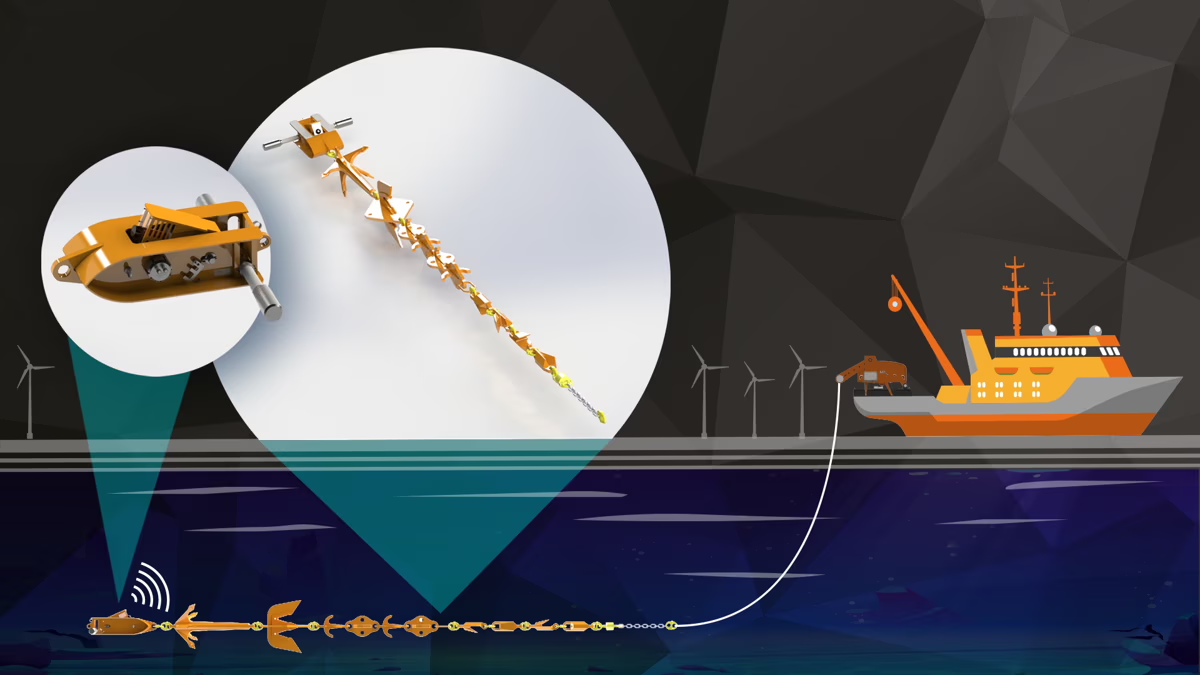
Dynamic Load Monitoring (UK) Ltd. (DLM), of Southampton, UK has launched a new Acoustic Positioning Grapnel — the Stingray — that sends a signal to a vessel towing a grapnel train.

DLM offers design, manufacture, repair, and calibration of load cells, load monitoring, and cable working equipment for the wind energy, renewables, and telecommunications sectors. It has steadily grown its grapnel range, used for recovering lightweight, fibre optic, or heavier-duty armoured cables on the seabed. The products are used by subsea cable lay companies and ship operators for pre-lay grapnel run (PLGR) and route clearance operations.

Stingray, which gets its name from being relatively flat and moving along the seabed, can be connected in the grapnel train and uses acoustics to send a signal to a vessel towing the train to communicate where it is on the seabed. It is positioned at the rear of a train of multiple grapnels attached together and towed behind the vessel when a PLGR is being undertaken. It is located the furthest away from the ship’s stern.

Stingray is 1,343mm long and 308mm high with the beacon closed; with it open, it is 473mm high. The main body is 500mm wide and, depending on what type of stabiliser is fitted, it is 900mm or 1,500mm wide. While there is only one body size, there will be options in that customers will be able to fit different sized stabilisers to suit deployment chutes. There will also be the ability to fit different manufacturers’ ultra-short baseline (USBL) beacons to meet the client’s preferences and what receiver is already fitted onto the vessel. The acoustic grapnel is manufactured from high-strength structural steel and covered with a special marine paint.

Martin Halford, managing director at DLM, said: “Technically, it is not a grapnel, as it doesn’t ‘grapple’ for anything. Instead, it feeds back information to the vessel on the grapnel train’s position. However, the overall shape of it is based on the front skid of our wheeled detrenching grapnel. As a grapnel train is being towed it is often just assumed that the train falls in line with the direction and movement of the vessel and follows the same path. However, this is not necessarily the case due to the length of the tow line and also the length of the train; the whole assembly can wander and in some cases the grapnel train could be outside of the planned route.

“This means the intended cable route may not be totally clear, resulting in more time repeating sections of the intended route. Time is a huge expense in offshore operations; delays like this could result in jobs either being profitable or loss-making, as they run into the hundreds of thousands of pounds. This is where Stingray comes in.”

Van Oord tests uses Stingray

Stingray was conceptualised during a project being completed by international marine contractor Van Oord, a longtime user of DLM’s load cells, load monitoring equipment, and grapnels. The company was involved in one of two sea trials of the product, following prototyping and testing. Van Oord needed to ensure an accurate grapnel location at all times and didn’t want to utilise a remotely operated underwater vehicle (ROV).

Prior to any such works, a survey is conducted to determine what is on the seabed, including any obstructions that need to be cleared. The type of seabed (sand, clay, or rock, etc.) can also be investigated to decide on the type of grapnels to be used. A PLGR operation is conducted where the grapnels are towed behind a vessel and the route where the cable is going to be laid is effectively cleared of obstructions and debris, along with perhaps grappling and recovering out-of-service cables, ready for the cable lay operations to commence afterwards.

Halford explained: “There have been instances in the past where an operator is grappling for an out-of-service cable that needs to be recovered and removed from the seabed. The operator would position the vessel at what is believed to be 90 degrees to the cable and then the operator would move the vessel forward to grapple for the cable. If this fails because the vessel is in the wrong location in relation to where the cable is, then the process needs to be repeated at extra time and cost. Having an ROV and the related equipment required to launch one of these onboard the ship incurs much larger cost than the Stingray system.

“We are increasingly being asked for a device that does exactly what the Stingray does — especially if [the PLGR] is in a tight corridor, where perhaps it is critical that the grapnels do not wander, due to the locality of pipelines or other no-go areas.”

DLM continues to develop smart grapnels, fitted with radio-frequency identification (RFID) chips from RiConnect, a cloud-based Software as a Service (SaaS) provider. While Stingray doesn’t have RFID, it can be fitted with a DL-3.0 data logger, which is able to log the movement of the product against time using its onboard microelectronic mechanical systems (MEMS) sensors.

Stingray is available to be purchased and sourced as a rental asset.

Associated Listing:
Liferafts International DiveCo Marine Civils Sealane Maritime Engineering
Seaplant Marine & Offshore Magazine

Join us

Our commercial marine magazine is designed to provide the perfect place for buyers and sellers of marine equipment and services to find each other.  Provide us with your name and address to receive your copy every month and upload your details to our website to be part of the Seaplant marine Business Finder.

add your company